Weed Barrier Is Awful - Right?
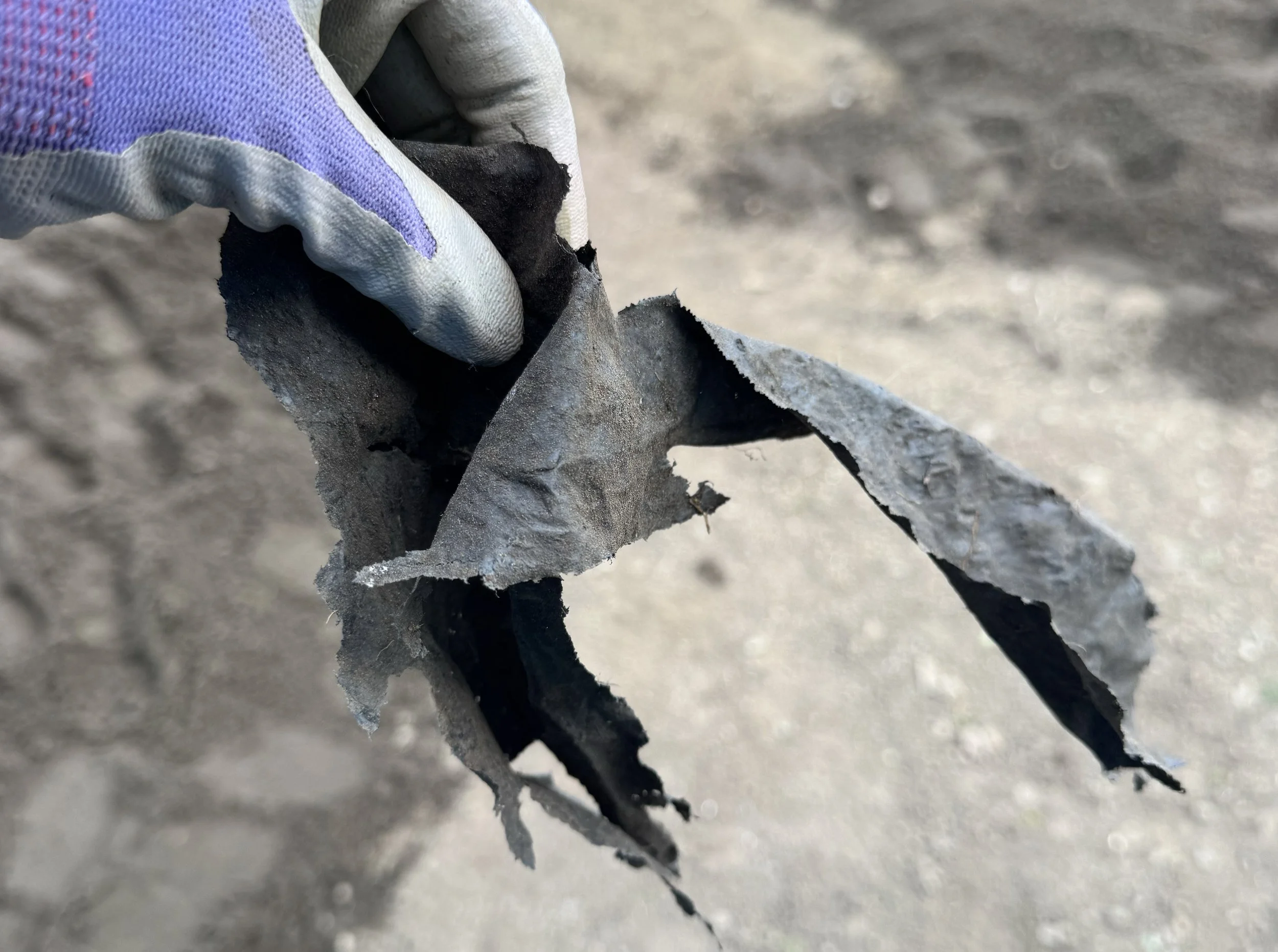
After a couple years, this is what you’ll be pulling out of your soil…
What San Francisco Peninsula homeowners should know before installing landscape fabric
If you’re planning a lawn replacement or xeriscape project in the San Francisco Peninsula—whether in San Mateo, Palo Alto, Redwood City, or Burlingame—you’ve probably heard about weed barrier (landscape fabric).
It’s often marketed as a simple solution: lay it down, cover it with mulch or gravel, and say goodbye to weeds forever.
Sounds ideal—especially if your goal is a low-maintenance, drought-tolerant landscape in the Bay Area.
But does it actually work that way?
At Xeric Oasis, we’re often asked whether weed barrier is worth using in xeriscape design and installation projects in California. The answer is nuanced—and understanding it can save you time, money, and long-term frustration.
What Is Weed Barrier?
Weed barrier (or landscape fabric) is a permeable material placed over soil to:
Suppress weed growth
Allow water and air to pass through
Create a separation layer between soil and mulch or gravel
It’s commonly used in:
Gravel-based landscapes
Pathways and hardscape areas
Some low water landscaping installations
The Promise vs. Reality
The idea behind weed barrier is appealing: block weeds and reduce maintenance.
But in practice—especially in Bay Area xeriscaping projects—it rarely performs as a long-term solution on its own.
🌱 Weeds Still Find a Way
Weeds don’t just grow from below. They:
Blow in as seeds
Take root in mulch or debris on top of the fabric
Grow through or around the material over time
⏳ It Breaks Down
Over time, weed barrier can:
Tear or degrade
Become exposed
Lose effectiveness
Especially in high-sun, coastal environments like the San Francisco Peninsula, materials can wear faster than expected. A garden full of microplastics? No thanks.
🌿 It Can Limit Soil Health
Healthy soil is alive. Weed barrier can:
Disrupt natural soil biology
Limit organic matter integration
Interfere with long-term soil improvement
For sustainable landscaping in the Bay Area, this is a key consideration.
When Weed Barrier Does Make Sense
Despite its limitations, weed barrier isn’t useless—it just needs to be used strategically.
✔️ Under Gravel or Pathways
In areas without plants, weed barrier can:
Stabilize surfaces
Reduce weed intrusion
Improve longevity of gravel installations
✔️ Short-Term Weed Suppression
It can help during the early stages of a xeriscape installation in California, giving plants time to establish.
✔️ Specific Design Applications
In some modern xeriscape designs in the San Francisco Peninsula, fabric is used selectively where it supports the overall system.
When to Avoid Weed Barrier
For planted areas—especially in drought-tolerant gardens in the Bay Area—weed barrier often creates more problems than it solves.
Avoid using it:
Around shrubs and perennials
In planting beds where soil health matters
As a “set it and forget it” weed solution
👉 In most cases, it becomes a maintenance issue rather than a solution.
What Works Better for Weed Control?
If your goal is a truly low-maintenance landscape in the San Francisco Peninsula, there are more effective, long-term strategies.
🌿 Dense, Intentional Planting
Well-designed plant spacing reduces exposed soil—leaving fewer opportunities for weeds.
🍂 Mulching (Done Right)
A thick layer of mulch:
Suppresses weed growth
Retains soil moisture
Improves soil over time
This is a cornerstone of water-wise landscaping in the Bay Area.
🪴 Healthy Soil Systems
When soil biology is strong, desired plants outcompete weeds more effectively.
🧠 Smart Design from the Start
The most important factor is not the material—it’s the plan.
A professionally designed xeriscape garden in San Mateo or Palo Alto considers:
Plant density
Irrigation strategy
Soil preparation
Long-term maintenance
And coupled with all these ideas, using biodegradable recycled cardboard weed barrier instead of plastic types gives a great result without any of the downsides.
The Bigger Picture: Designing for Low Maintenance
Weed barrier highlights a common misconception:
👉 There’s no single product that eliminates maintenance.
The real solution is integrated design—combining:
Drought-tolerant plants
Proper spacing
Mulch systems
Efficient irrigation
This is how you achieve a low water, low maintenance landscape in the Bay Area that actually performs over time.
Why Work with Xeric Oasis?
At Xeric Oasis, we specialize in xeriscape design, lawn replacement, and drought-tolerant landscaping in the San Francisco Peninsula.
We help homeowners:
Avoid common pitfalls like over-reliance on weed barrier
Build landscapes that suppress weeds naturally
Create outdoor spaces that are both beautiful and sustainable
Our approach focuses on long-term performance—not quick fixes.
Ready to Build a Landscape That Actually Works?
If you’re planning a xeriscape installation, lawn replacement, or low water landscaping project in San Mateo, Redwood City, Palo Alto, or surrounding Peninsula communities, we can help you get it right from the start.
👉 Contact us to schedule your consultation and learn how to create a stunning, low-maintenance garden designed for California’s climate.
Final Thoughts
Weed barrier isn’t inherently good or bad—it’s just a tool.
Used in the right context, it can be helpful. Used incorrectly, it can create more work than it saves.
For homeowners in the San Francisco Peninsula, the goal isn’t to eliminate maintenance entirely—it’s to design a landscape where maintenance is minimal, predictable, and manageable.
And that starts with the right strategy—not just the right material.