Using Native Shrubs for Privacy
Creating beautiful, low-water screening for San Francisco Peninsula-area gardens
Using plantings to screen out noise in a garden is an effective and natural way to create a peaceful environment. For homeowners across the San Francisco Peninsula—Pacifica, San Mateo, Palo Alto, Redwood City, Burlingame, and surrounding Bay Area communities—noise pollution is a real concern, whether from traffic, neighbors, or general urban activity.
With thoughtful plant choices and strategic design, you can significantly reduce unwanted noise while enhancing the beauty and function of your outdoor space with a drought-tolerant, low-maintenance landscape.
How Plants Reduce Noise
One of the primary ways plants block noise is by creating a dense barrier that absorbs, deflects, or diffracts sound waves. Evergreen shrubs and trees are especially effective because they maintain their foliage year-round, providing constant coverage.
These living barriers:
Reduce transmission of sound (especially low-frequency noise like traffic)
Create a buffer between your space and surrounding activity
Improve the overall comfort of your garden
For Bay Area xeriscape design, this approach allows you to combine function and sustainability.
Designing an Effective Living Screen
The effectiveness of plantings depends on size, density, and placement.
A combination of trees and shrubs creates multiple layers of sound-blocking material. The more varied the planting, the better the sound diffusion, since different plant forms interact with different sound frequencies.
👉 For homeowners planning lawn replacement or xeriscaping in the San Francisco Peninsula, this layered approach is key.
Best Practices:
Plant along property boundaries or noise sources
Use a mix of tall, medium, and low-growing plants
Create dense, staggered plantings
Align with prevailing wind direction for added buffering
The thicker and more layered the planting, the more effective it will be.
Beyond Noise: Additional Benefits
In addition to reducing noise, plant-based screening offers:
🌿 Privacy from neighbors and streets
🐦 Habitat for birds and beneficial insects
🌎 Improved air quality and biodiversity
💧 Reduced water use when using native plants
For homeowners seeking sustainable landscaping in the Bay Area, this is a win on every level.
Moving Beyond Traditional Hedges
Shrubs and small trees have long been used for screening. Traditionally, this meant tightly clipped hedges—but those come with drawbacks:
High water use
Constant pruning and maintenance
Limited ecological value
👉 In modern xeriscape design in the San Francisco area, rigid hedges are being replaced with naturalistic, mixed plantings.
These newer approaches:
Require less maintenance
Use less water
Provide habitat and seasonal interest
Look more organic and dynamic
Why Use California Native Plants?
Native shrubs and trees are especially well-suited for drought-tolerant landscaping in the Bay Area. They:
Thrive in local soil and climate conditions
Require minimal irrigation once established
Support native wildlife
Reduce long-term maintenance needs
Proper placement is crucial—plant along boundaries, near noise sources, or where screening is most needed.
Why Mixed-Species Screens Work Best
Using a mix of different species in a screening provides multiple advantages:
🌱 Resilience to Pests & Disease
Monocultures are vulnerable—if one plant is affected, all are at risk. Mixed plantings reduce this exposure.
🐝 Supports Wildlife
A variety of plants supports a wider range of insects and birds, strengthening the local ecosystem.
💧 Reduces Water & Energy Needs
Native plants can create beneficial microclimates—shading each other and reducing evaporation.
🔥 Improves Fire Resilience
Selecting plants that smolder rather than ignite can help reduce fire risk—an important consideration in California landscape design.
Recommended Native Shrubs & Small Trees for Screening
Below are some of our favorite plants for creating privacy screens and noise buffers in San Francisco Peninsula gardens. Most require watering during their first summer but need little to none once established.
👉 Be sure to space plants appropriately—these will fill in over time.
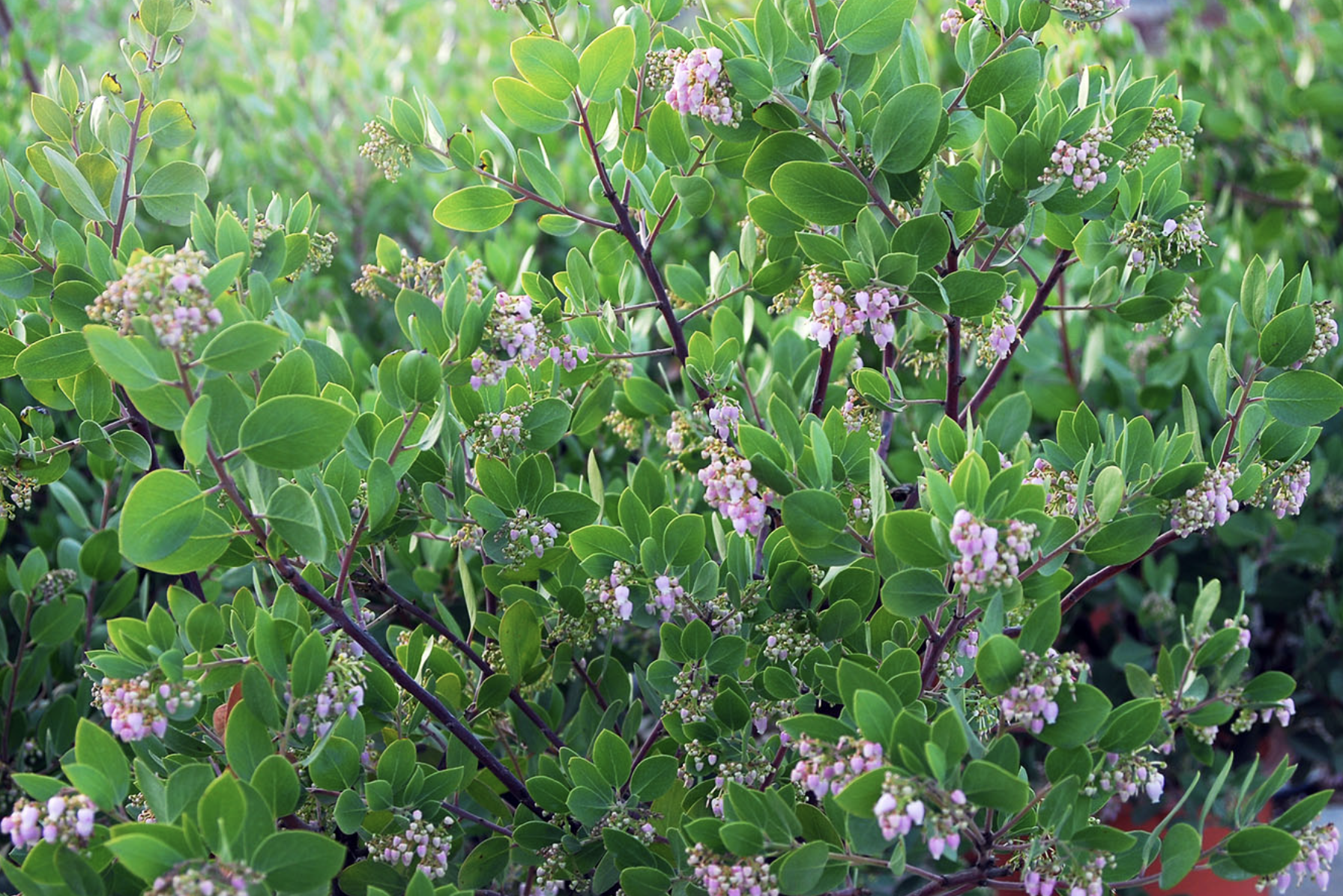
Arctostaphylos ‘Austin Griffiths’ (Manzanita)
~10 ft tall and wide
Pale pink winter flowers attract pollinators
Beautiful red bark and blue-green leaves
Drought-tolerant, fire-, deer-, and gopher-resistant
This beautiful flowering shrub gets about 10 feet high and wide. Its pale pink flowers are magnets for hummingbirds and other pollinators. In fact, even larger birds are attracted to its flowers for the nectar. It begins blooming in January and continues through the winter, providing a much-needed source of food for wildlife. It is one of the faster growing manzanitas, but not as fast growing as some of the other plants in this list. The glossy blue-green leaves and smooth rich red bark are beautiful even when it is not in flower. This plant does best in full sun or part shade, and won’t need any water after it is established. It is also fire-, gopher- and deer-resistant.
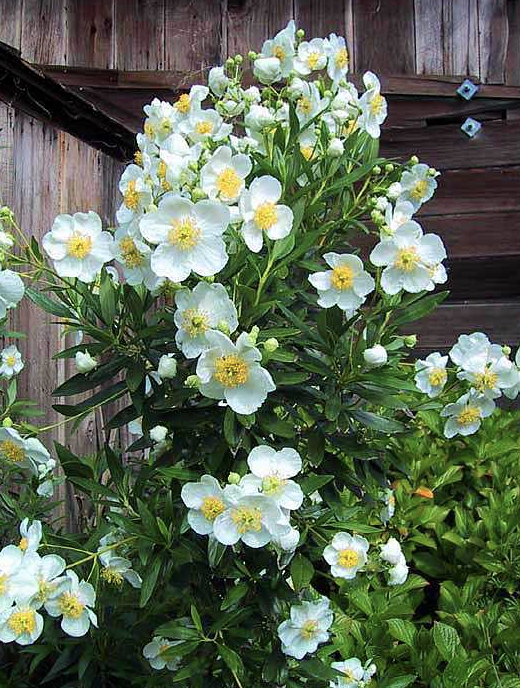
Carpenteria californica (Bush Anemone)
6–8 ft tall
Fragrant white flowers in spring/summer
Dense growth ideal for screening
Thrives in sun or shade
This beautiful shrub gets about 6-8 feet tall in gardens. It is very drought resistant but can tolerate more summer water than many of our other native plants. It is a handsome shrub with oblong dark green glossy leaves, and the spring and summer flowers are showy, white and very fragrant. It thrives in either sun or shade. Like many other California native plants, it thrives best on neglect in fairly poor soil. Its dense growth habit makes it a great addition to a screening planting.
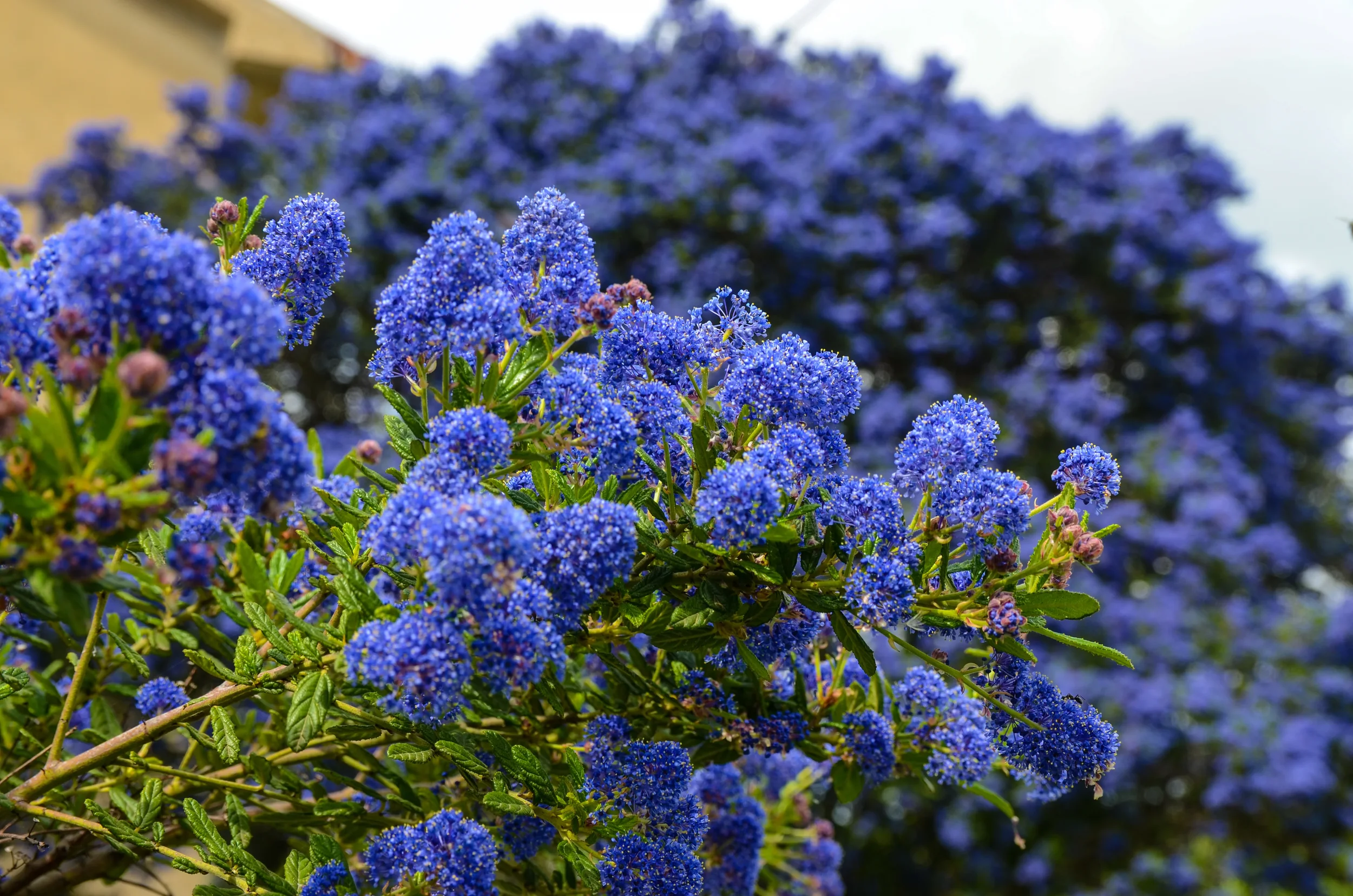
Ceanothus ‘Dark Star’ (California Lilac)
8 ft tall, 10 ft wide
Deep purple-blue flowers
Fast-growing and adaptable
No summer water after establishment
This is considered one of the showiest of the many ceanothus available to us in California. Growing to 8 feet high and 10 feet wide, it can really fill in a screening area quickly. Its spring blooms are nearly purple and attract many native pollinators. Like most ceanothus, it will need some summer water to get established the first year, but after that it does best with no summer water. This adaptable plant grows in sandy or clay soil, and can tolerate some shade, wind and salt spray. It is resistant to gophers and deer, and is also fire-resistant.
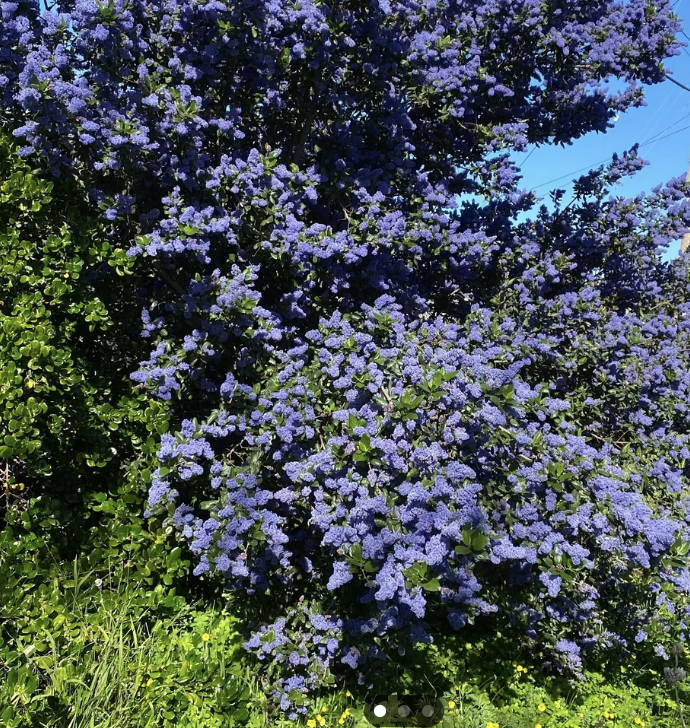
Ceanothus ‘Ray Hartman’
Up to 15 ft tall
Fast-growing (10 ft in ~3 years)
Excellent large-scale screen
This plant is covered in beautiful light to medium blue flowers in the spring. Growing to about 15 feet tall and almost as wide, it is a great plant for screening. Like many of our native shrubs, it prefers full sun to part shade, and won’t need any water after it gets established. Pollinators love it, and it has a fairly long blooming season. It is a fast grower- it can get to 10 feet within 3 years of planting! Like many of our native plants, it does best with very little fertilizer and very little soil amending. The perfect plant for an area that is difficult to water, even if the soil is sandy or clay, since it won’t need watering after its first year.
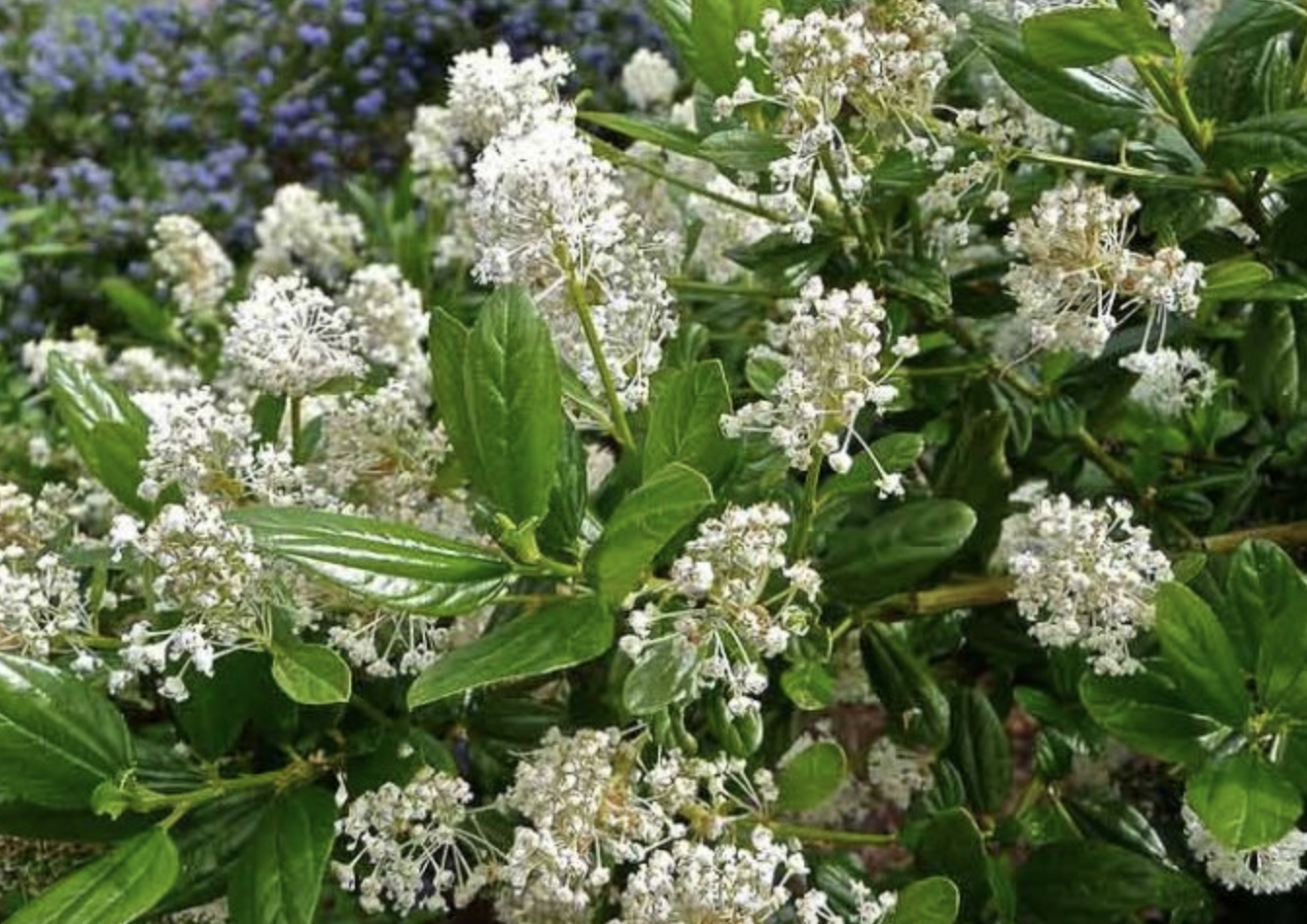
Ceanothus ‘Snow Flurry’
~10 ft tall and wide
White blooms, coastal-friendly
Handles clay soil well
This large ceanothus produces lots of tiny white flowers, which truly do make it look like it is covered in snow. Not quite as big as ‘Ray Hartman’, it still gets to about 10 feet tall and wide. It grows fairly quickly, and needs no summer water once established. This water-wise shrub doesn’t like extremes in temperature, so it does better near the coast where it isn’t too hot or too cold. It does well in clay soil though, which we have a lot of in our area. Pollinators and birds flock to the flowers, and it is resistant to gophers and deer.
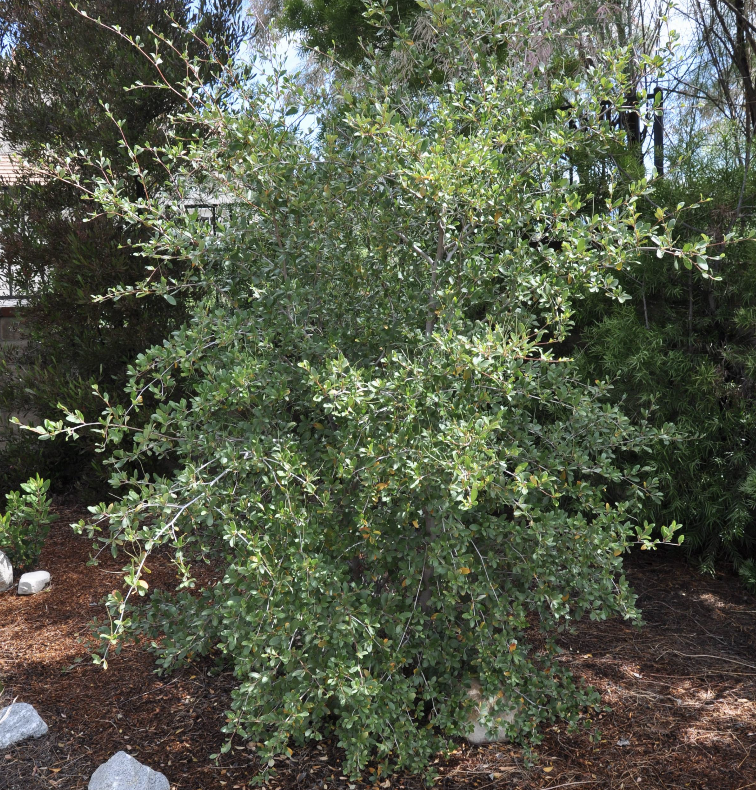
Cercocarpus betuloides (Mountain Mahogany)
Up to ~20 ft
Extremely drought-tolerant
Feathery seed heads add visual interest
This beautiful evergreen shrub can grow to 20 feet tall, but is usually shorter. It grows reasonably fast, and won’t need any summer water near the coast once it is established. It thrives in dry, rocky soils and is very drought tolerant. Inland it may need occasional water in hot weather. The small creamy white flowers in springtime are loved by pollinators. Later, the long, feathery seed tails shimmer beautifully in the sun. It is fine with clay soil and wind, and is resistant to gophers and deer.
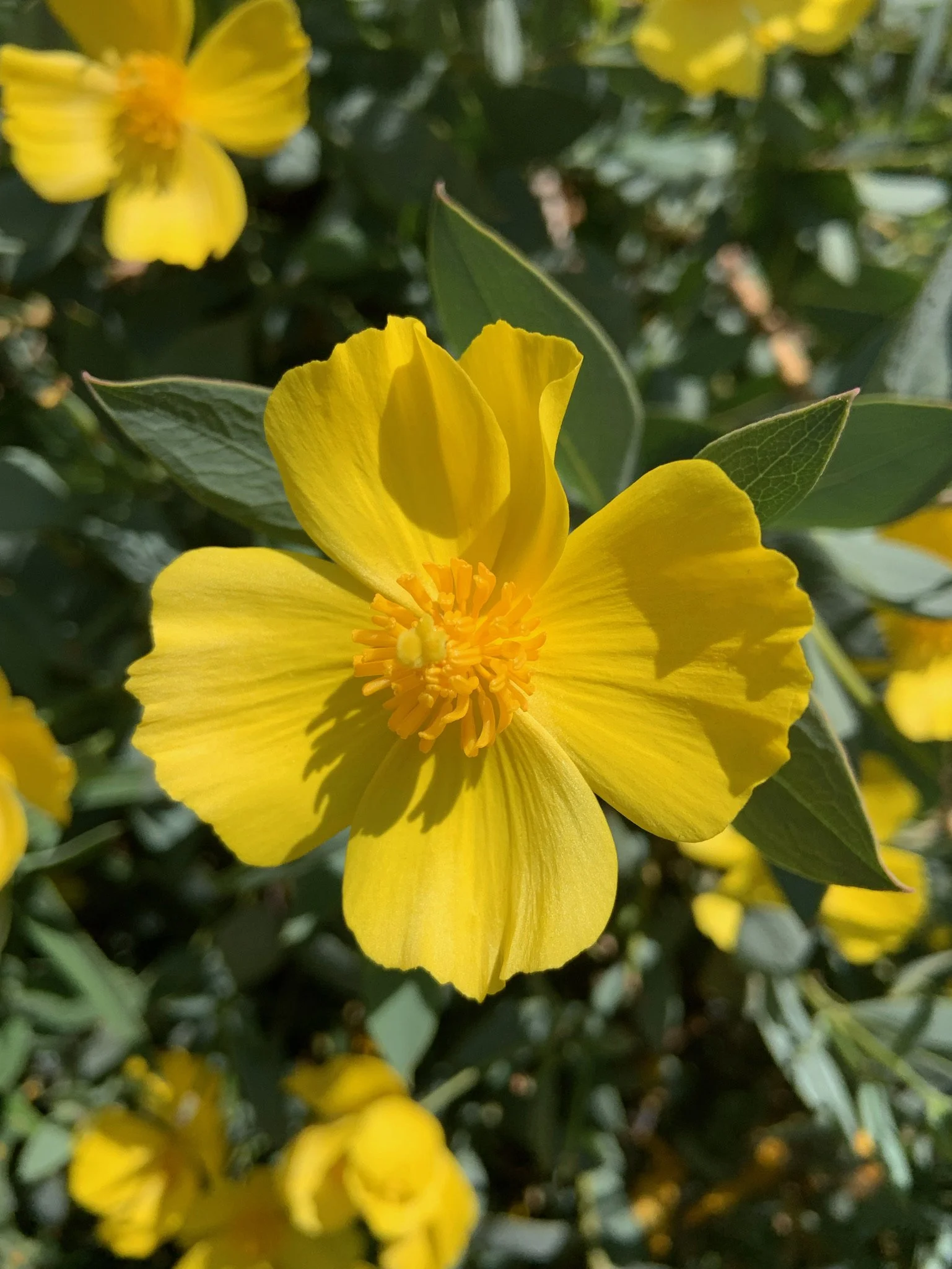
Dendromecon harfordii (Island Bush Poppy)
~8 ft tall
Bright yellow flowers nearly year-round
Thrives in dry, sunny conditions
This shrub isn’t as tall as many of the others here, but it is still big enough to make a great screen. It is rather fast growing and gets about 8 feet tall, but is usually shorter. Its beautiful yellow flowers are very cheery, and although it mainly blooms in spring and summer, it seems to have a few blooms on it for most of the year. The leaves are leathery and a beautiful blue-green color. This plant is extremely drought tolerant- give it full sun, well-draining soil, and minimal water and it will be happy.
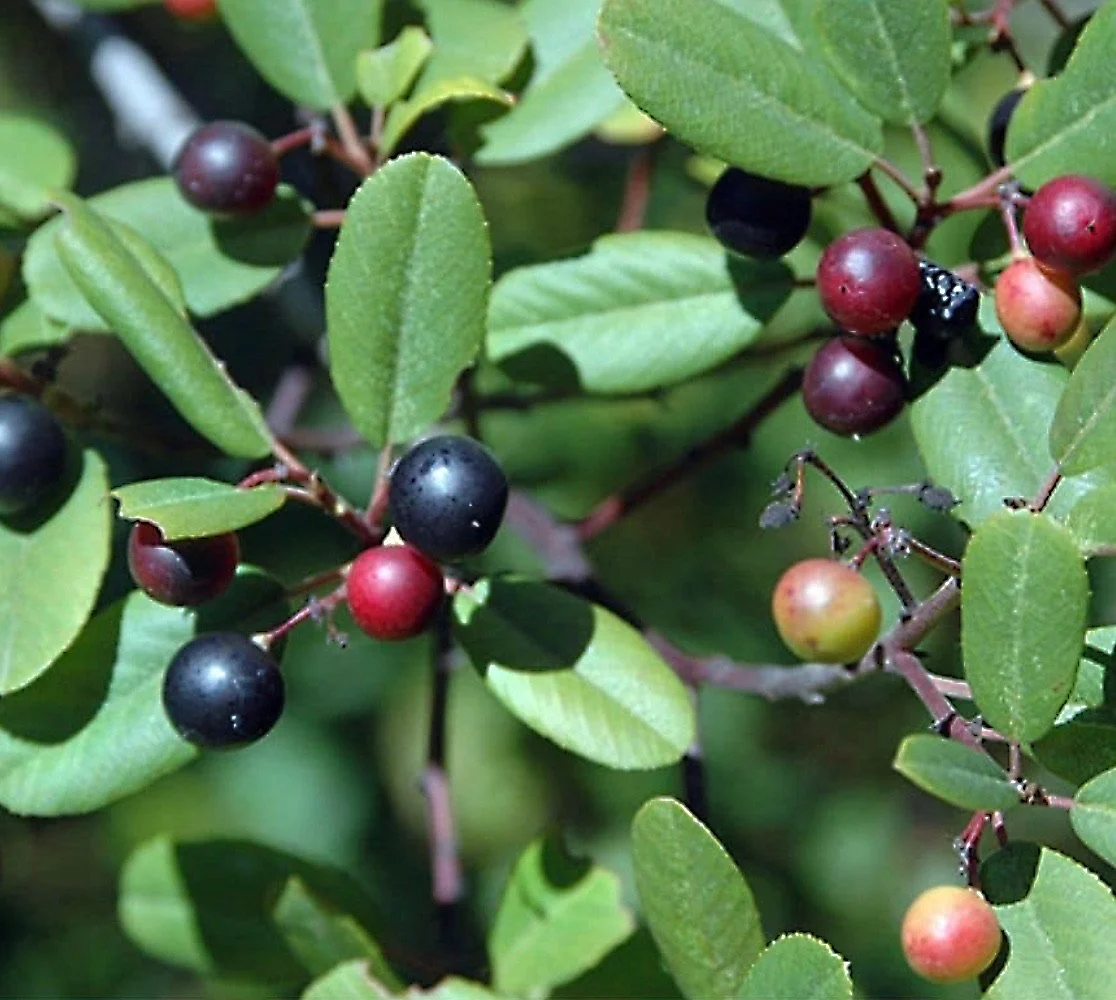
Frangula californica (Coffeeberry)
~15 ft tall
Excellent for wildlife
Tolerates shade, wind, and coastal conditions
This useful plant grows to about 15 feet tall and almost as wide. Its small flowers and berries attract many native pollinators and birds. Coffeeberry is very adaptable, tolerating heavy soil, dry shade, wind and salt air. The dense foliage is a great shelter for lots of wildlife, and the red berries ripen into black fruits which birds love. This plant is another very drought tolerant shrube that does well in a water-conservation garden.
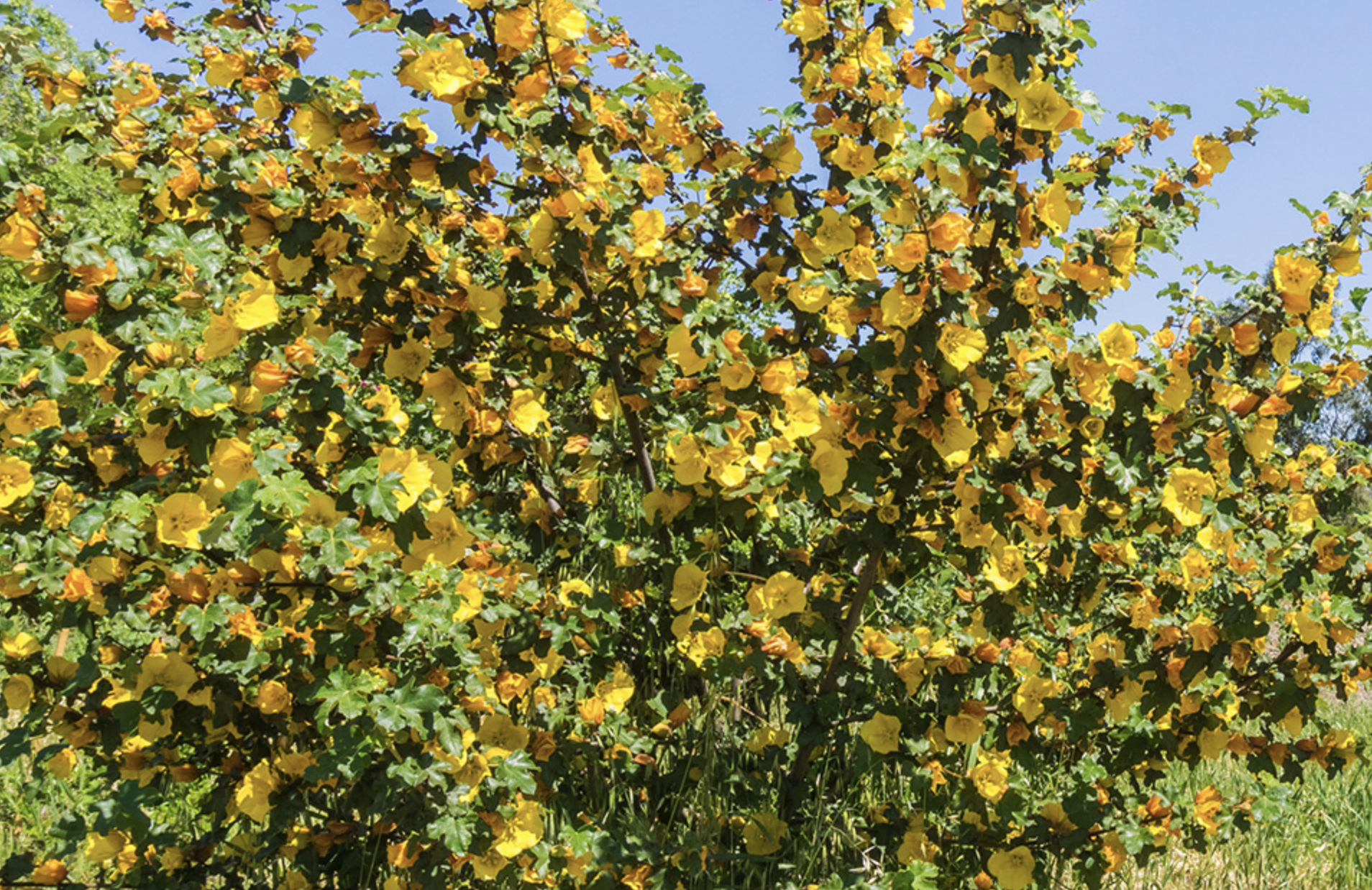
Fremontodendron californicum (Flannel Bush)
Up to ~20 ft
Bright yellow flowers
Very drought-tolerant once established
A beautiful shrub native to dry slopes of California, it is covered with cup-shaped flowers, bright yellow with red-orange tints, followed by hairy capsule fruits. A fast-growing evergreen shrub with an upright, sprawling form, it can get as large as 20 feet tall, although it is usually much shorter. Attracts many pollinators, but is gopher and deer resistant. It can also tolerate salty air. Lobed leaves are dark gray-green above and as felty as flannel below. The hairy leaves can be irritating to skin. This plant likes to be placed about 10 feet from a water source rather than being watered directly, and once established needs no summer water at all.
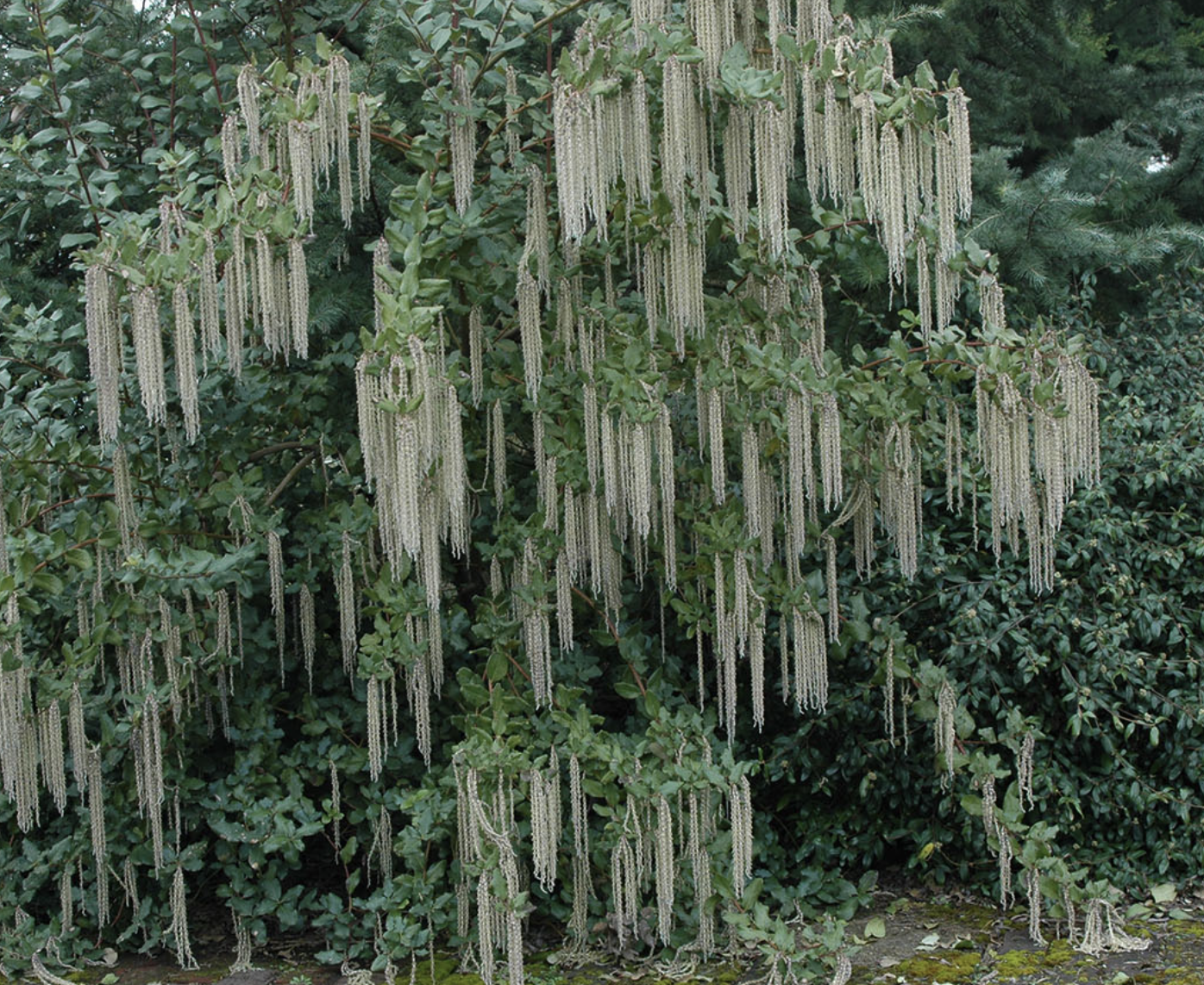
Garrya elliptica (Coast Silktassel)
~15 ft tall
Dramatic winter catkins
Great coastal performer
This beautiful native plant can grow as a large shrub or a small tree, to about 15 feet tall. It is moderately fast growing, and the leaves have a wavy texture that shows off the pale gray undersides against the dark green upper surfaces. In winter, the male plants produce dramatic catkins up to 10 inches long that drape like tassels from the branches. Along the coast it thrives in full sun to light shade, and is resistant to gophers and deer. It isn’t fussy about soil and can grow in heavy soil as long as it doesn’t stay soggy in the summer.
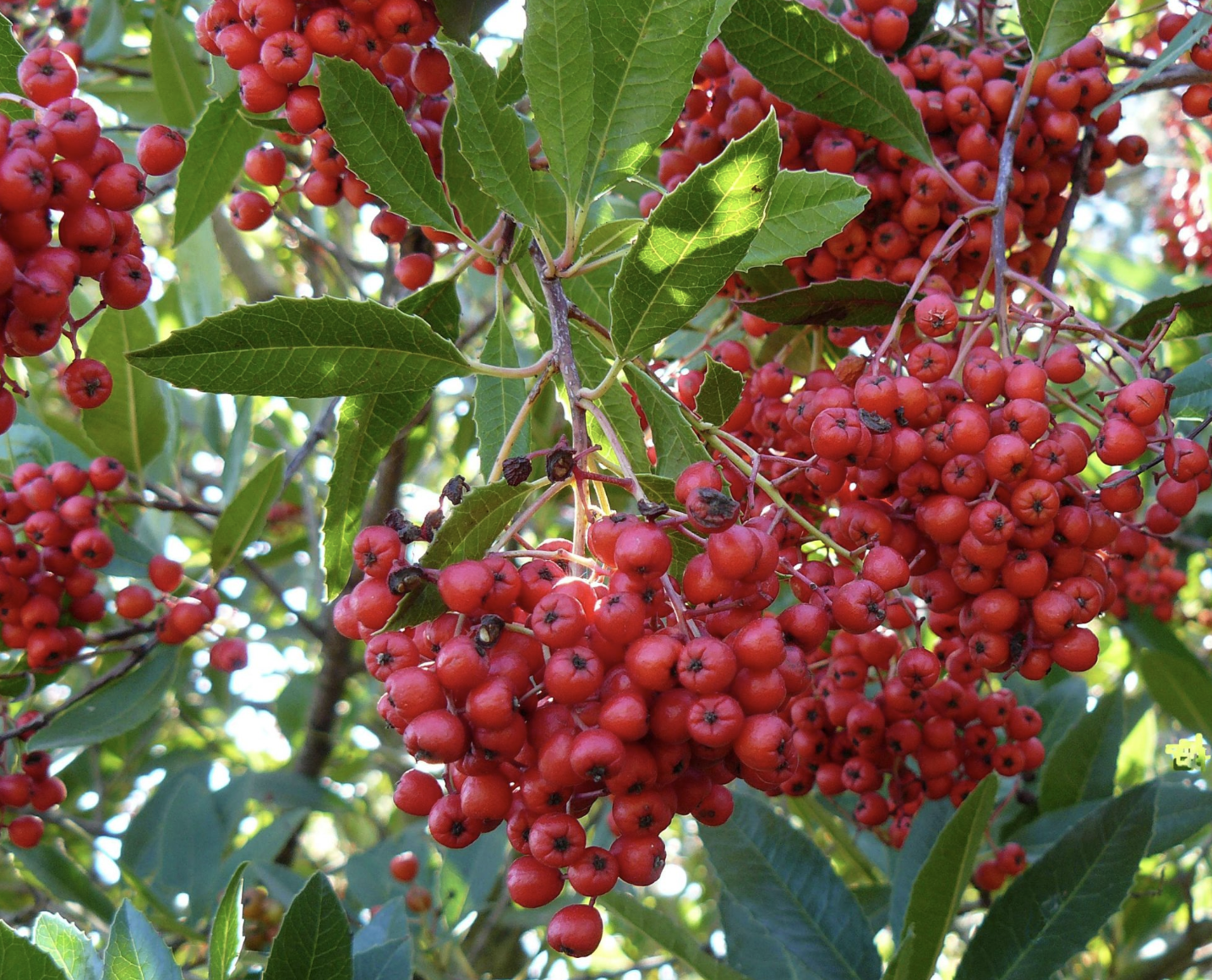
Heteromeles arbutifolia (Toyon)
8–20 ft
Red berries for birds
Extremely adaptable
The ‘holly’ of Hollywood fame, this native shrub has clusters of tiny white flowers in the summer that become beautiful red berries later in the year. These fruits are a valuable winter food for many birds. Usually under 8 feet tall, over time this plant can reach almost 20 feet tall, but that is rare. Like many of the other plants featured here, it does better with water to get established, but none after that. Pollinator are attracted to the flowers, but gophers and deer tend to leave mature plants alone (deer may munch on younger plants). This plant is tolerant of almost any poor soil that exists, including sandy or rocky soil, and is a great plant to combine in a mixed-species planting, since it blooms when many other plants are finishing.
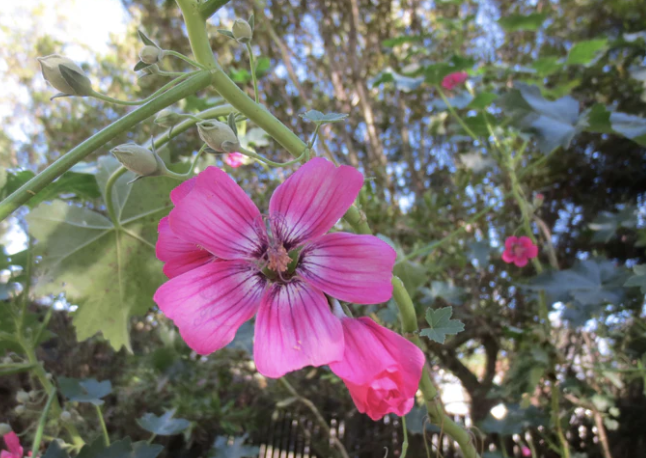
Lavatera assurgentiflora (Island Mallow)
~10 ft tall and wide
Fast-growing with pink flowers
Wind- and drought-tolerant
This is a fast growing shrub that can get 10 feet high and wide. Its light green, maple-like leaves are very attractive, and the showy, rose-pink flowers bloom from spring to fall. Native to the Channel Islands, this plant is useful as a drought tolerant, wind resistant, fast growing screen plant. It will grow well along the coast in practically any type of soil, and loves full sun. Birds feed on its nectar as do many native insects. Pruning helps maintain a nice form. although it looks tasty, deer do not like it.
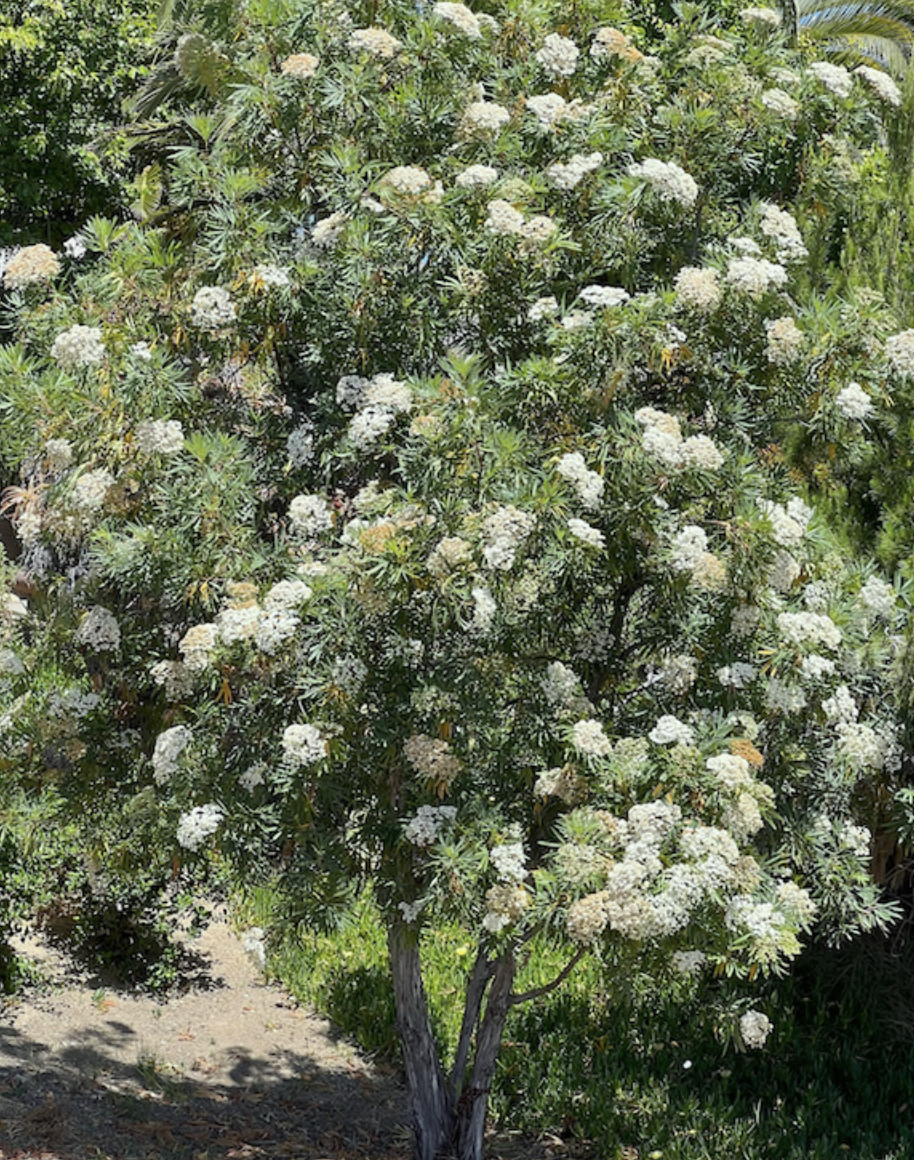
Lyonothamnus floribundus (Catalina Ironwood)
Up to ~30 ft
Fern-like foliage
Coastal and drought-adapted
This small tree rarely gets taller than 30 feet, and has graceful fernlike foliage. Being from the Channel Islands, it can tolerate salty air and likes a bit of water in the summer, although we have seen it thrive near the coast in the Bay Area with no water. Its white flowers are attractive to birds and pollinators, and its green foliage makes a great backdrop for other shrubs. It can grow in both clay and sandy soil. Deer will graze on it while it is young, but once it is big enough they leave it alone.
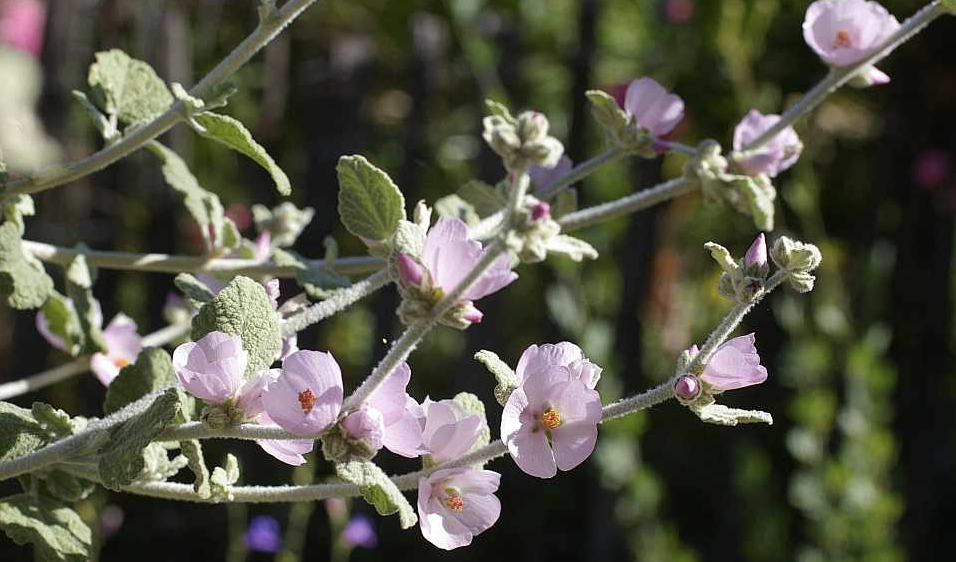
Malacothamnus fremontii (Bushmallow)
~6 ft tall
Pink flowers, supports butterflies
Thrives in dry conditions
This plant has distinctive pale silvery gray felted leaves and beautiful pale pink flowers. Growing about 6 feet tall and wide, it is suitable for any sunny, dry area in the garden. It is a host plant to several butterfly species, and spreads by root runners to form a small thicket. A bit of fall pruning helps it maintain its shape. Bushmallow is not fussy about soil at all, as long as it gets minimal water during the summer months. It thrives in clay or sandy soil, and can do well in light shade.
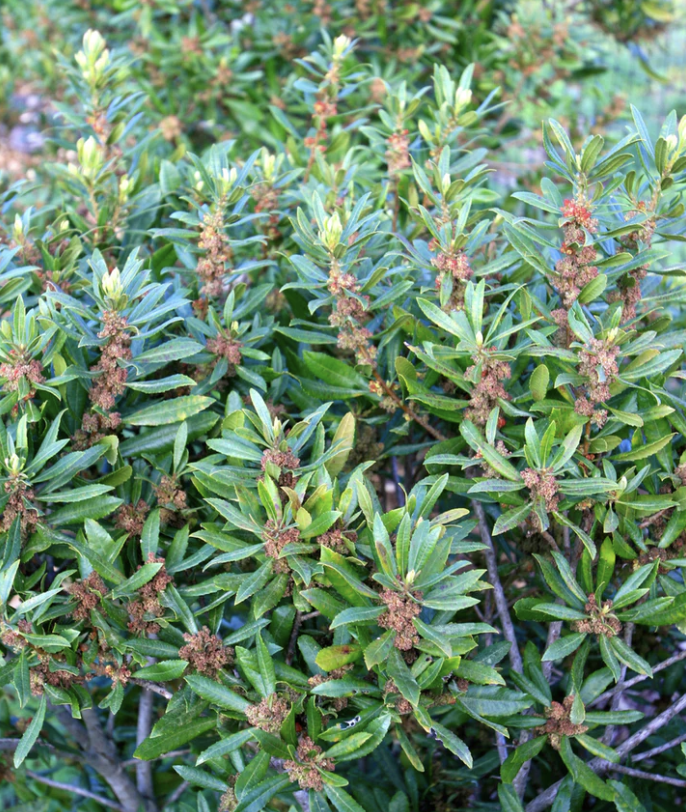
Morella californica (California Wax Myrtle)
Up to ~30 ft
Dense evergreen screen
Excellent for coastal gardens
The wax myrtle is found along the coast of California, Oregon and Washington. This plant is adaptable to both full sun and shade, although it is denser in full sun. It can eventually get up to 30 feet tall, but is happy even if it is pruned to 10 feet or less. It grows moderately fast and creates a pretty, leafy green screen. It does well in both sandy and clay soils, and can tolerate wind, making it a useful plant along the coast. Wax myrtle is also able to add nitrogen to soil, which improves it for all plants. Its small yellow flowers produce dark berries that are loved by birds as a winter treat. It is also fire-, gopher- and deer-resistant. We’re not sure why this plant isn’t used more in Bay Area gardens.
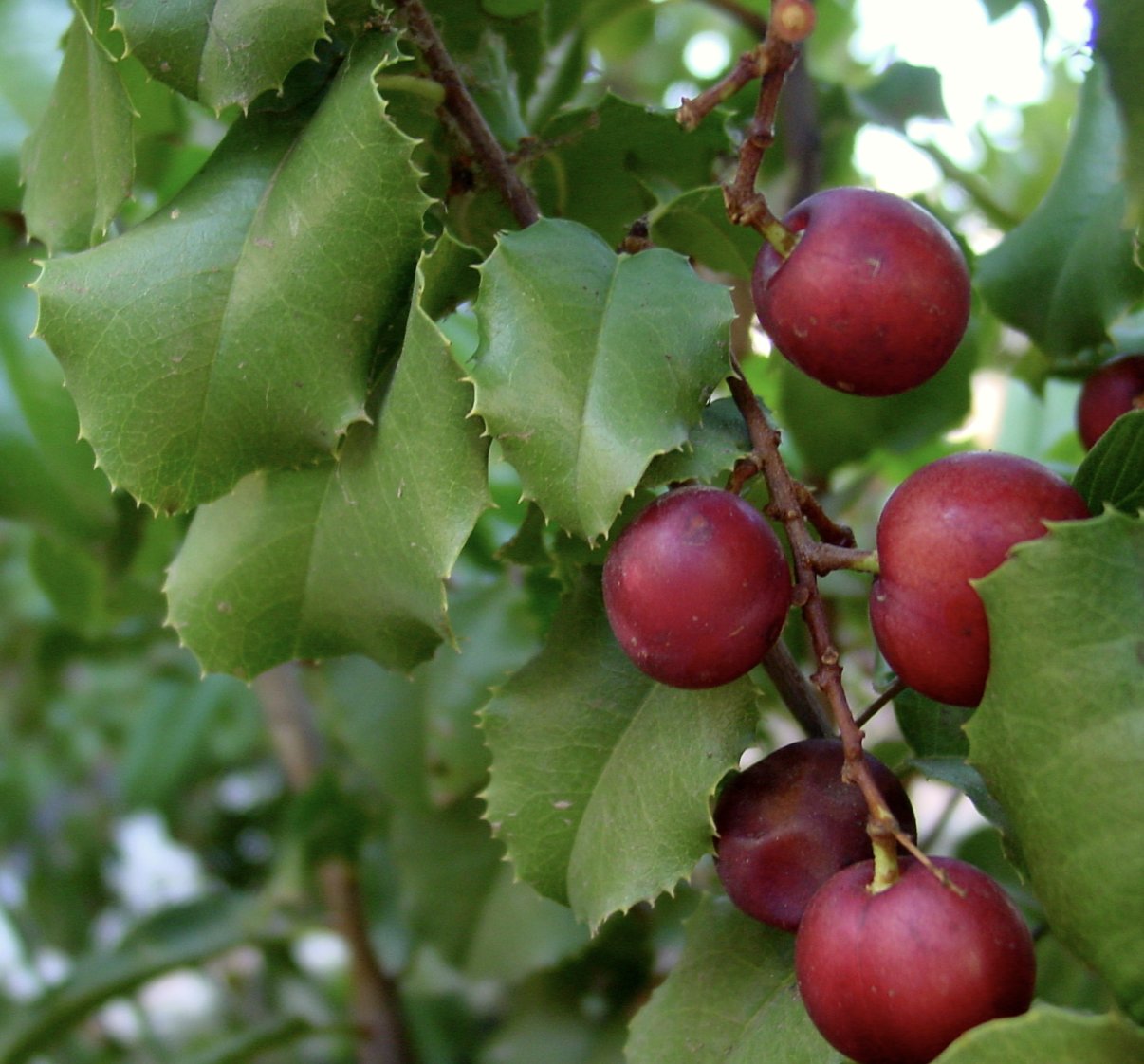
Prunus ilicifolia (Hollyleaf Cherry)
Large shrub/small tree
Bird-friendly fruit
Fire- and drought-resistant
Another favorite with our native birds, this plant produces spikes of small white flowers that are followed by cherry-like fruits that birds love. Growing as either a large shrub or small tree, this plant isn’t as fast growing as some of the others here, but fills in over time. It is also fire- and deer-resistant, and can tolerate clay soil.
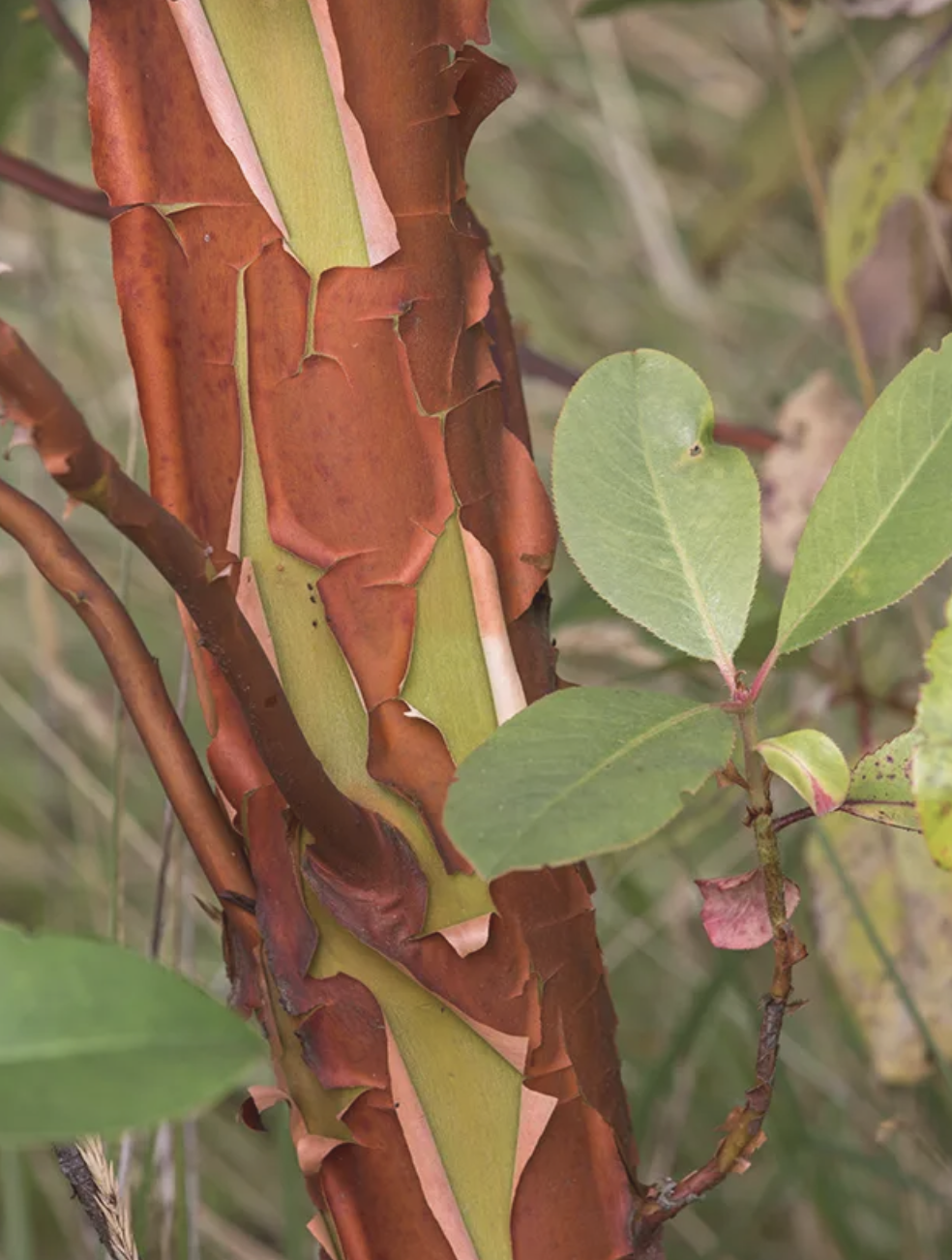
Arbutus menziesii (Madrone)
Iconic California tree
Striking bark and berries
Thrives in dry coastal conditions
An evergreen tree native to the western U.S. known for its smooth, reddish-brown bark, which peels away in thin layers, revealing a fresh green surface beneath. This adds a dynamic, ever-changing visual quality to the tree. Madrone's leathery, dark green leaves contrast beautifully with clusters of white to pinkish flowers in spring, which are followed by bright red berries. It thrives in coastal and woodland areas, is highly drought-tolerant once established, and attracts various birds and wildlife.
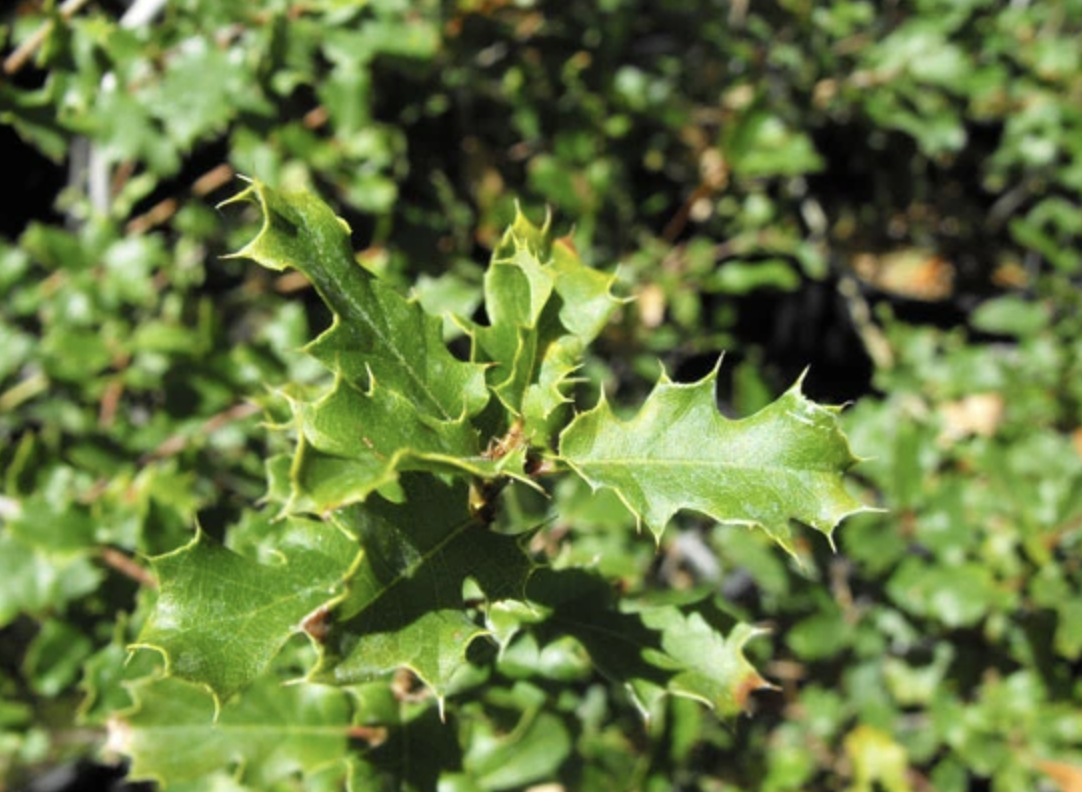
Quercus berberidifolia (Scrub Oak)
10–15 ft
Extremely resilient
Supports wildlife
This small three is able to thrive in harsh environments, including rocky hillsides and dry, nutrient-poor soils. Unlike larger oaks, scrub oaks tend to remain small, growing as low, bushy shrubs or multi-trunked trees, typically no taller than 10-15 feet. Its thick, leathery leaves are often deeply lobed, offering a distinct look. The scrub oak is also incredibly resilient to drought, and its acorns provide a valuable food source for wildlife. This oak supports a wide range of animals, including deer, birds, and native rodents. The tough, dense wood is resistant to fire, helping the tree survive in fire-prone areas.
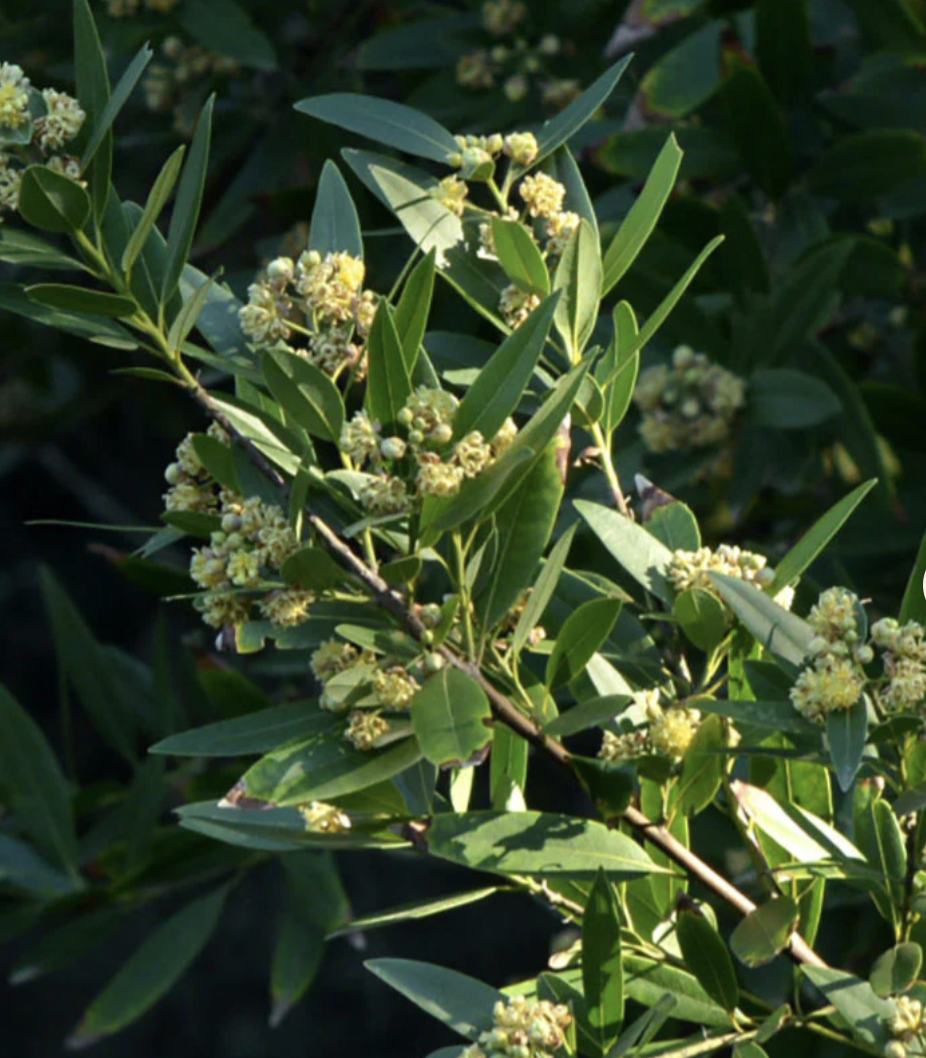
Umbellularia californica (California Bay Tree)
30–60 ft
Dense evergreen foliage
Aromatic leaves
This tree’s glossy, dark green leaves create a rich, evergreen backdrop, and its aromatic foliage releases a pleasant, spicy scent when crushed. This tree can be used as a focal point or as a privacy screen due to its dense growth habit, often reaching 30-60 feet tall. It thrives in well-drained soils and full sun to partial shade. It attracts wildlife and can be used for culinary purposes, with its flavorful leaves enhancing various dishes. It can thrive in clay soil and is deer resistant. Like many native plants, it is drought-tolerant once established, making it a sustainable addition to water-wise gardens. This tree is a host to the fungus that causes sudden oak death, so it is best not to introduce it to areas where it is not already growing.
The Key to Success: Design + Placement
These are just a few of the many plants that can be used in a privacy screen or noise-buffering landscape in the Bay Area.
The real success comes from:
Choosing the right mix of plants
Designing for your specific site conditions
Planning for long-term growth and spacing
Create a Private, Peaceful Landscape with Xeric Oasis
At Xeric Oasis, we specialize in xeriscape design, drought-tolerant landscaping, and lawn replacement in the San Francisco Peninsula.
We help homeowners:
Design natural privacy screens that reduce noise
Select native plants suited to their microclimate
Build beautiful, low-water landscapes that thrive with minimal maintenance
Whether you’re in San Mateo, Redwood City, Palo Alto, or nearby Peninsula communities, we can help you transform your yard into a quieter, more private, and more sustainable space.
👉 Contact us to schedule your consultation and start designing your ideal landscape today.
Final Thoughts
Using native shrubs and trees for privacy isn’t just practical—it’s transformative.
With the right approach, you can:
Reduce noise
Increase privacy
Support local ecosystems
Lower water use and maintenance
In the San Francisco area, where space, water, and tranquility are all valuable, a thoughtfully designed xeriscape screen is one of the smartest investments you can make in your home.