My Plant Died. What Next?
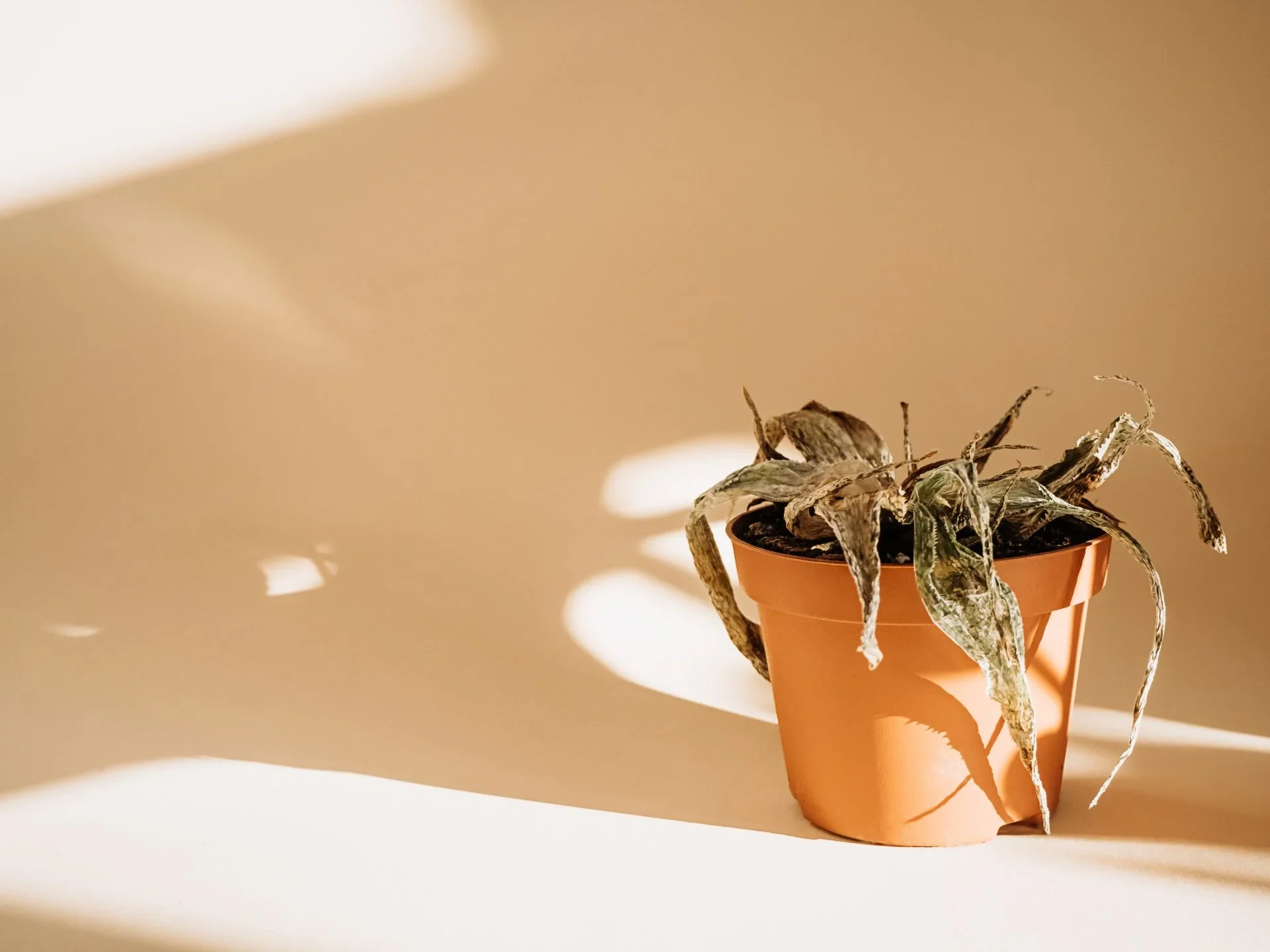
Yes, it’s dead. To the compost bin you go…
In an ideal world, all the lovely plants we install grow and flourish from day one, and live happily ever after, with not a single one dying. However, they’re living things, so it’s inevitable that some of them won’t thrive in their new home, despite our best efforts. Yes, we’re sad, but it’s all part of growing living things.
Why Plants Don’t Make It
There are a myriad reasons why a plant might die after installation. These reasons can be grouped into two areas. The first is areas we can control. And the second: areas we can’t control.
Areas we can control are how the plant is selected (healthy, strong, and appropriate for the site’s conditions), and how it’s planted (in the correct soil, with careful handling, the right type of fertilizer, staking and a good watering basin if needed, and correct irrigation installed with it.)
Areas we cannot control are… everything after planting. More about that below.
Our Replacement Policy
Our plant replacement policy covers plants for 30 days from date of installation, and states that we will replace any that die in that time frame with another plant of the same or similar size and type. This ensures that we provide healthy plants that have been correctly planted. Exceptions to this policy are being crushed or peed on by your pet dog, eaten by deer, rabbits, voles or gophers, overrun by insects, viruses or fungi, destroyed by the elements, under or over watered, driven over by your car (or your kid’s bike) or other factors we have absolutely no control over. We also don’t guarantee the success of proteaceous plants (Banksia, Protea, Grevillea, Leucospermum, and Leucadendron to name a few) due to their occasionally finicky nature.
Replacement Rate
Did you know that a typical range for plant replacements after landscape installations industry wide is 5-15% of the total plants installed? That means that in a smaller, 300-plant installation between 15 and 45 plants might need to be replaced. When we read that, the percentage felt high - and potentially wasteful. In our experience, we replace 0-2% of newly installed plants.
Why are these typical replacement rates the norm in the industry? In order to keep costs down, some installers use lower quality plants, and set unreasonably high planting rates for their teams. Those teams are forced to cut corners to get plants into the ground quickly, and as a result, the plants suffer.
Similarly, they may install irrigation haphazardly, giving lots of water to plants that prefer little, and vice versa. Or they may even plant plants that are badly suited to the site conditions just because the owner wants them.
Policy Length
In deciding on our replacement policy terms, first we polled our competitors and colleagues. Our friends in the industry told us they gave no written guarantee - they’d simply replace a plant if they felt it was needed. That’s definitely a simple solution. Others say they guarantee plants for between one and 12 months.
When we ran the numbers, accounting for long policy terms would be very expensive: It would make our customer’s estimates higher because we would need to account for the time spent looking for and installing replacement plants over a much longer period.
The cost to replace plants is high (finding the plants, the actual plant cost, plus travel to the nursery, then to the client garden to replace the plant) and comes AFTER the final bill is paid, so we're extra incentivized to reduce the cost of replacement by making sure the plants and their installation are of the highest quality. We do this by:
1. Designing with the right plants for our client's soil and weather in the first place.
2. Hand selecting the healthiest plants in person vs just ordering them online and hoping for the best.
3. Carefully supervising the installation of every plant, in person.
4. Returning to the client’s garden after 7 days, and again after 30 days, to make sure all the plants are healthy and happy.
5. Being available to answer questions and concerns from clients so we can optimize plant health right away if needed.
It’s a policy that works for us and our clients, keeps costs down and makes sure clients get what they want the most; a beautiful garden full of happy plants.
Why Work with Xeric Oasis?
At Xeric Oasis, we specialize in drought-tolerant landscaping, xeriscape design, and lawn replacement in the Bay Area.
We help homeowners:
Replace high-water lawns with stunning, low-water landscapes
Select the right plants for their specific microclimate
Design outdoor spaces that balance beauty, function, and sustainability
Understand specific municipal codes to make sure your home meets their guidelines for fire safety.
From consultation to installation, our goal is to create landscapes that thrive with minimal water—without sacrificing style or putting your home at risk.
👉 Ready to have the garden of your dreams? Contact us to schedule a consultation.