Landscaping to Reduce Fire Risk: What Homeowners Need to Know
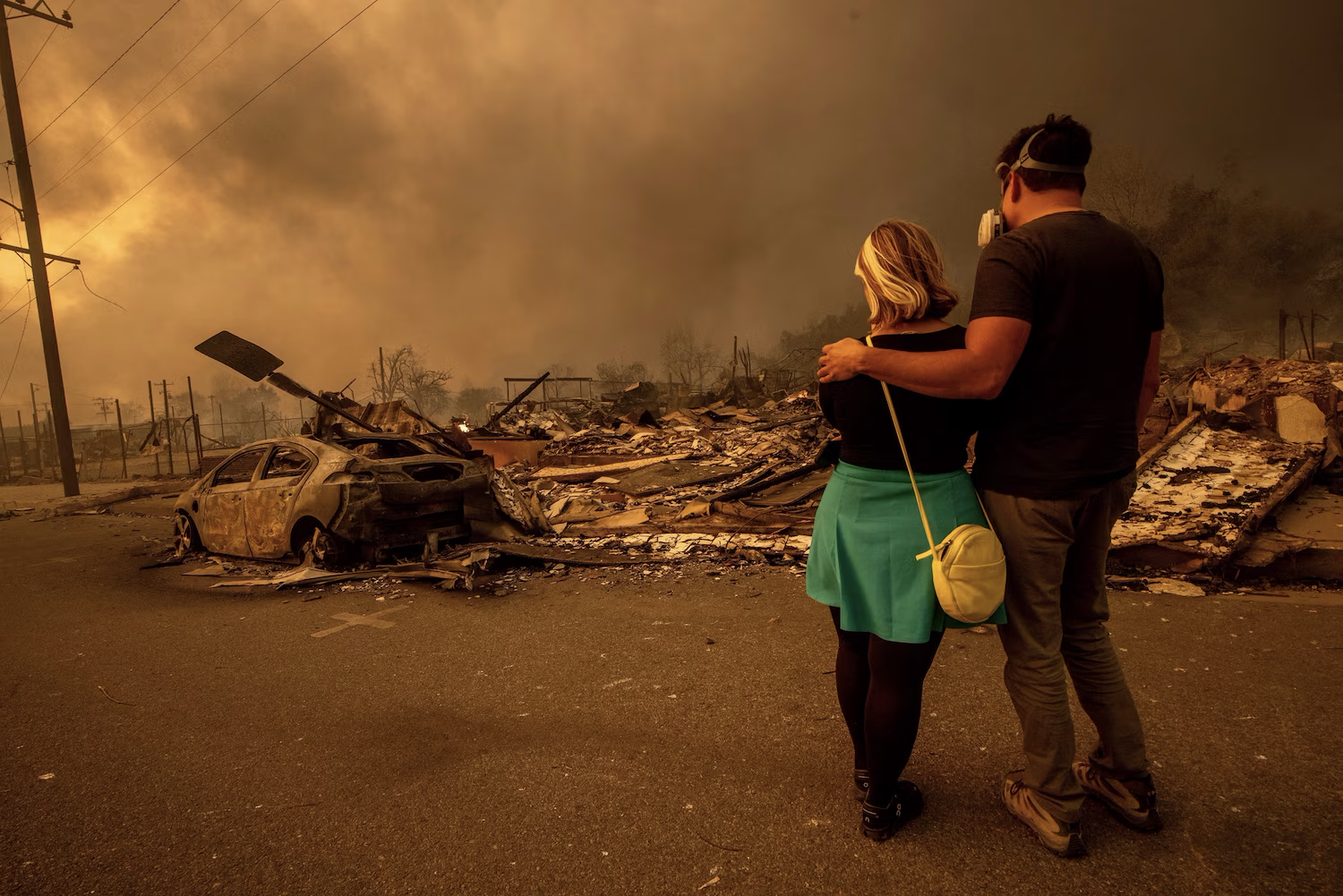
Wild fires are a fact of life: Learn how to protect yourself
By Annie
As we have seen in the news in recent years, wildfires are becoming increasingly common and devastating, and homeowners are seeking proactive ways to protect their properties. Are you ready? Strategic landscaping can significantly reduce fire risk, creating a buffer that helps slow or stop the spread of flames. This approach, often referred to as creating "defensible space," involves thoughtful planning and maintenance of the area around a home.
This article helps you understand the three zones of defensible space, the role of global warming in wildfire frequency, and how to choose fire-resistant plants and materials, so you can make informed decisions to safeguard yourself and your property.
The Role of Global Warming in Fire Frequency
Global warming has intensified wildfire risks worldwide. Rising temperatures and prolonged droughts have created ideal conditions for fires to ignite and spread. Warmer climates lead to drier vegetation, which serves as fuel for wildfires. Additionally, climate change has altered precipitation patterns, often resulting in less frequent but more intense rainfalls, leaving landscapes parched for extended periods. Homeowners must recognize that these changes increase the likelihood of wildfires, making proactive landscaping and fire preparation more critical than ever.
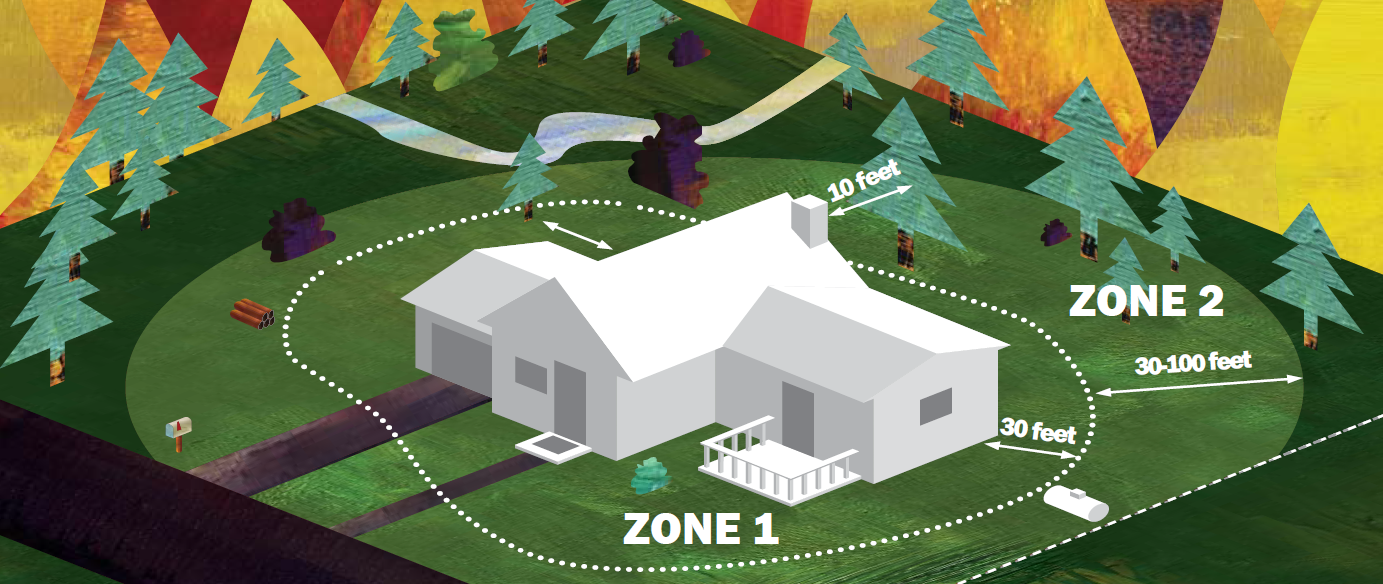
The Three Zones of Defensible Space
Defensible space is a critical concept in fire mitigation, dividing the area around a home into three distinct zones, as defined by the California Department of Forestry and Fire Protection:
Zone 1: Immediate Zone (0-5 feet)
This zone is the most critical for protecting a home from fire. It should be a non-combustible area, free from flammable vegetation and debris. Use hardscape elements such as gravel, stone, or concrete instead of organic mulch, which can ignite easily. Plants, if any, should be low-growing and well-spaced, with high moisture content - think succulents, not dry grasses. Regular maintenance, including clearing dead leaves and cleaning gutters, is essential to prevent the accumulation of flammable materials.Zone 2: Intermediate Zone (5-30 feet)
The goal of this zone is to reduce the intensity of a fire as it approaches the home. Plants should be spaced to prevent fire from jumping between them, and trees should have their lower branches pruned to prevent flames from climbing. Incorporate fire-resistant plants with high water content and low resin or sap levels. Maintaining a healthy, well-irrigated landscape is key, as dry, overgrown vegetation can act as fuel for fires.Zone 3: Extended Zone (30-100 feet or more)
This outermost zone focuses on slowing the fire and keeping it on the ground. Thin out dense vegetation and remove dead plants, leaves, and branches. Ensure that tree canopies are spaced apart, and avoid planting trees or shrubs that are highly flammable. The extended zone acts as a final barrier, giving firefighters more time to protect the property.
Characteristics of Fire-Resistant Plants
The choice of plants and landscaping materials AND how they are maintained can significantly influence a property's fire resilience. Fire-resistant plants are less likely to ignite and can even slow the spread of flames. Key characteristics of these plants include:
High moisture content: Succulents like Agaves, Aloes, Echeverias, Aeoniums, Yuccas and more store water in their leaves and stems, making them less likely to catch fire. Similarly, well watered plants are less likely to catch fire than dry, or even dead ones.
Low resin or oil content: Avoid plants with waxy, resinous, sticky or aromatic foliage, such as junipers and eucalyptus, which burn quickly.
Open growth habits: Plants with less dense foliage and fewer dead materials are less likely to sustain a fire. Dense plants can be “ember traps” and foster fire easily.
Growth speed and size potential: Fast-growing plants need more space and possibly more maintenance: think carefully about how tall or wide they will get.
Shedding habits: Plants that shed bark, seeds or leaves (known as “litter”) need frequent cleanup to reduce fire hazards. Even evergreens will shed litter though, so remember to maintain them carefully.
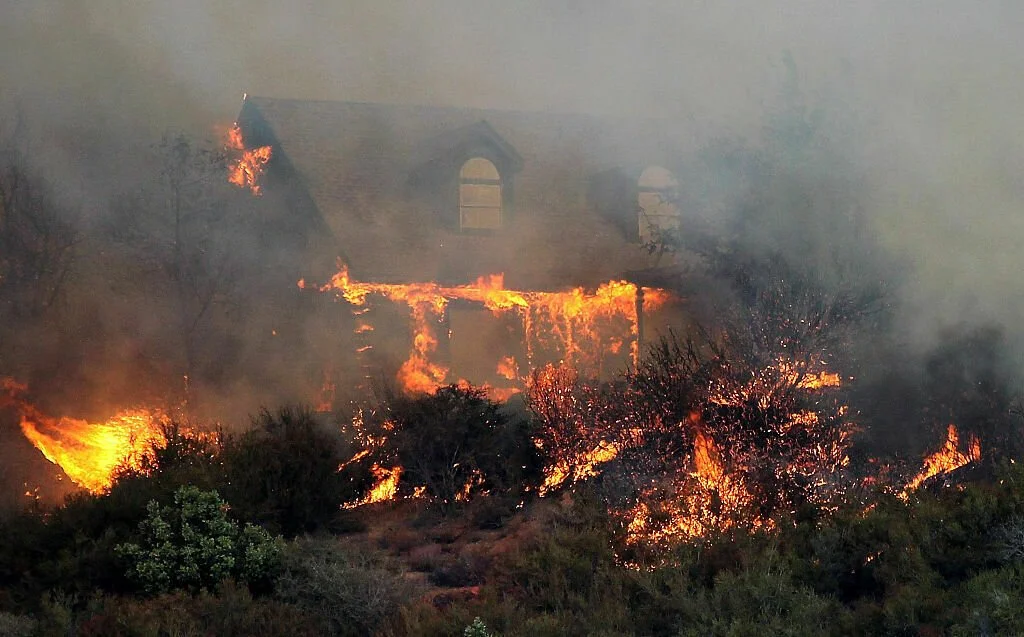
Trees and shrubbery close to your home can catch embers.
Take Your Trees Seriously
Trees are important to our ecosystem, when planted in the right place and maintained thoughtfully. Regularly assess your trees for health and remove or replace those that are diseased or in decline to keep your property safe. Maintain a healthy tree canopy, which is less likely to catch embers.
Branches close to or overhanging buildings can damage structures and increase fire risk by dropping debris on roofs, gutters, and decks. Position trees at least 5 feet from structures, and remove any branches that overhang roofs or decks to prevent fire spread and physical damage.
Plant Choice: Things to Watch Out For
There are a number of areas where plant selection may prove tricky though. For one, various authorities produce lists of fire resistant plants, but they are sometimes contradictory and rarely complete. Part of the reason for this is that some fire resistant plants are suitable for Zone 8, for example, but not Zone 10 due to their growing characteristics.
Secondly, choosing plants based on ‘fire-safe’ labels can be problematic. Research shows that plant flammability tests lack standardization, making ‘fire-safe’ claims unreliable. In addition, definitions used in flammability testing can vary, leading to confusion
Next, how a plant is cared for and where it grows can affect its fire resistance more than its label. A well watered shrub with plump leaves that has had any dead material removed regularly will be far more fire resistant than a shriveled, dry plant of the same species surrounded by dead leaves and twigs.
Lastly, native plants are often a good choice, as they are adapted to local conditions and require less water, reducing the need for irrigation, but beware of confusing fire resistant plants (those that resist being set alight) with fire adapted plants (those who can survive being burned and will spring back to life soon after, or who benefit from being burned in order to reproduce and can even encourage fire thanks to their volatile oil content.) This last point is a critical area that homeowners often trip up on, leading to disastrous consequences.
Choosing Fire-Resistant Substrates and Hardscape
Substrates also play an important role in fire prevention. Non-combustible materials, such as decomposed granite, gravel, or stone, are ideal substrates for ground cover because they are non-ignitable and do not contribute fuel to a fire. These materials can be easily integrated into a landscape design to enhance both safety and aesthetics by creating pathways, patios, or decorative borders that complement the overall layout while reducing fire risk.
Organic mulches provide a good job in retaining moisture and maintaining good soil health but should be used sparingly and only in areas remote from the home or other structures. Less flammable materials, such as composted wood chips, may be a safer choice than shredded bark or pine needles, but still shouldn’t be close to structures. Noncombustible buffer zones must be maintained around structures when organic mulches are used, and not directly against walls.
Hard landscaping features such as stone walls, fire-resistant decking, and paving will add further protection while enhancing the beauty of your landscape. Thoughtful integration of these materials creates a safer, resilient outdoor environment.
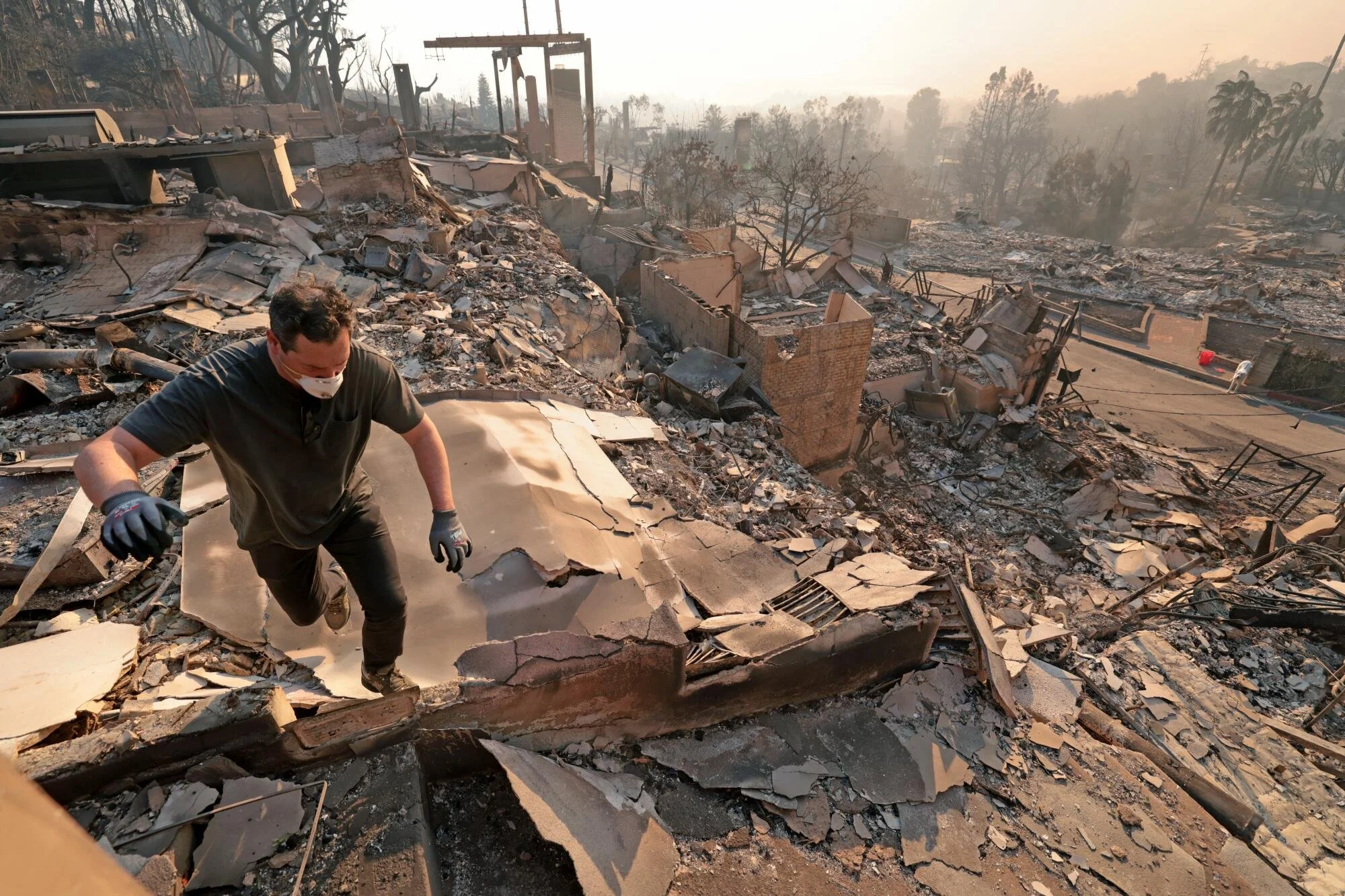
The heartbreaking aftermath
Proactive Steps for Homeowners
To reduce fire risk through landscaping, homeowners should take the following steps:
Conduct regular maintenance: Clear dead leaves, branches, and other debris from the yard and roof. Keep plants trimmed and well-watered.
Use fire-resistant materials: Opt for non-combustible materials in walkways, patios, and ground covers.
Create breaks in vegetation: Incorporate hardscape features like paths, retaining walls, or patios to act as fire breaks.
Stay informed: Monitor local fire danger levels and adhere to any guidelines or restrictions issued by authorities.
Why Work with Xeric Oasis?
At Xeric Oasis, we specialize in fire-safe,drought-tolerant landscaping, xeriscape design, and lawn replacement in the Bay Area.
We help homeowners:
Replace high-water lawns with stunning, low-water landscapes
Select the right plants for their specific microclimate
Design outdoor spaces that balance beauty, function, and sustainability
Understand specific municipal codes to make sure your home meets their guidelines for fire safety.
From consultation to installation, our goal is to create landscapes that thrive with minimal water—without sacrificing style or putting your home at risk.
👉 Ready to prepare your garden for fire season? Contact us to schedule a consultation.
Final thoughts
Fire season is now year round in some areas. Landscaping for fire safety involves much more than mere aesthetics; it's about creating a defensible space that protects your home and family. Homeowners, by understanding the principles of defensible space, recognizing the impact of global warming on fire frequency, and selecting fire-resistant plants and materials, can make their properties much safer and resilient.
At Xeric Oasis not only are a great many of the plants we use considered resistant to fire, but we can also design a garden from scratch that creates fire breaks, uses hardscape safely, and sites trees and other plants so they don’t contribute to the growing risk of fire in our area.
With proactive planning and maintenance, one can coexist with the increased fire risks of a changing climate and still enjoy a beautiful and functional landscape.