Sustainable Gardening: How to Get Started in California
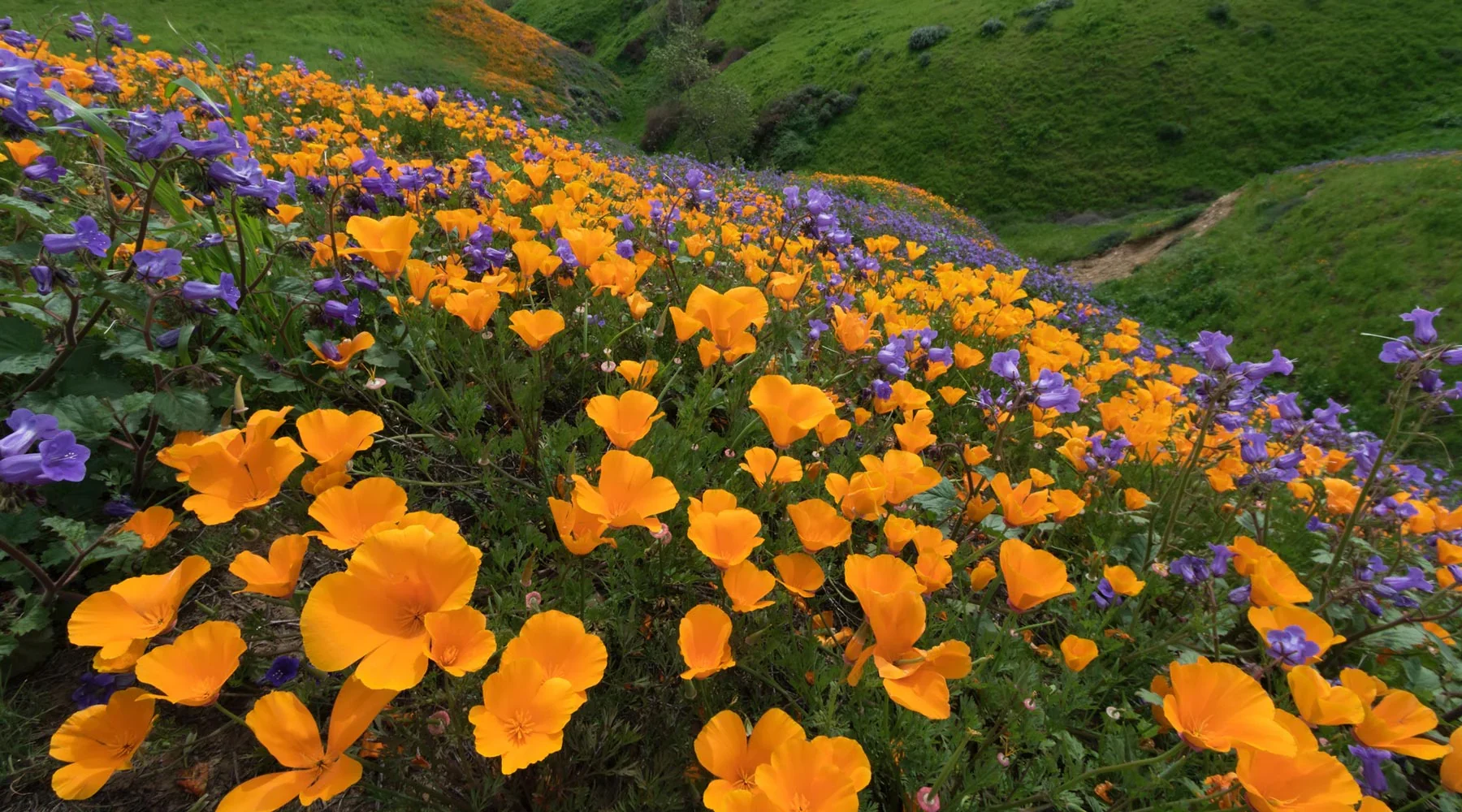
California poppies and Phacelia on a hillside
By Annie
(This article is taken from a talk given at an Open Day at our home office in June 2026.)
In this article we'll discuss how California gardeners can create beautiful, resilient landscapes that use fewer resources, support local ecosystems, and require less maintenance over time.
Whether you're starting from scratch or improving an existing landscape, sustainable gardening is about working with nature rather than against it.
I’m also going to cover a few questions that have been asked of me:
Is it ethical to have an ornamental garden - non-functional in an edible sense - in our climate, and if so, how can we create a lush landscape using gardening practices that have the least impact on our environment?
How can we make realistic steps in the right direction, without falling on our faces and ending up with a garden that feels self-righteous and boring?
I’m also going to talk about how to succeed without feeling like you’re missing out on some of your favorite plants, and how to survive the adrenaline rush of the plant nursery and come home with plants that will work for you.
Let’s dive right in!
Is it ethical to have an ornamental garden?
Absolutely - if the garden does more for the environment than it takes away. And creating a sustainable garden is the way to do that.
You don't have to choose between aesthetics and ethics. Many gardeners practice foodscaping—the integration of edible plants, herbs, and fruits into an attractive, ornamental layout. Similarly, you can create a habitat garden that balances aesthetic beauty with environmental benefits.
So, what is a sustainable garden, and how do I make one?
What Is Sustainable Gardening?
Sustainable gardening is the practice of creating landscapes that:
Conserve water
Build healthy soil
Reduce waste
Support pollinators and wildlife
Minimize chemical inputs
Thrive in local climate conditions
The goal is simple: create a garden that becomes more self-sufficient and environmentally beneficial every year.
Why Sustainable Gardening Matters in California
California presents unique gardening challenges:
Long dry summers
Neverending droughts
Water restrictions
Increasing temperatures
Wildfire concerns
Declining pollinator populations
A sustainable garden is better equipped to handle these challenges while reducing costs and maintenance.
The Five Principles of Sustainable Gardening
Successful sustainable gardens are built on five principles:
Build healthy soil
Use water wisely
Select climate-appropriate plants
Support biodiversity
Reduce external inputs
Every decision we make should support one or more of these principles.
As a company, Xeric Oasis does this in a practical sense by planting the right plants, avoiding plastics and gas powered landscape tools, and making sure that we separate greenwaste from other waste so it can be correctly recycled when we do dump runs for clients, among other things.
Start with the Soil
Healthy soil is the foundation of every successful garden.
Benefits include:
Optimal water retention
Improved plant health
Reduced fertilizer needs
Increased drought tolerance
Enhanced microbial activity
Think of soil as a living ecosystem rather than simply dirt, with healthy plants as a by-product.
Understanding California Soils
Many California gardeners deal with:
Clay soils
Sandy soils
Compacted urban soils or disturbed construction soils
Before planting, observe:
How quickly water drains
Soil texture
Existing vegetation will give a lot of clues
Areas of compaction
Understanding your soil helps guide all future decisions.
TIP: for heavy clay soil with drainage issues, build berms or raised beds of fast draining soil over the top so that plants have a better chance of success. The number of plants that thrive in heavy clay soil is very, very small. And amending clay soil to improve it takes a lot of time and effort to do.
Where’s your water going?
Address drainage issues up front, or pay the price later.
Directing lots of water into the foundations of your house is a great idea. Said nobody ever. Fix boggy spots and downspouts that dump water into your foundations BEFORE you start planting. It’s disruptive to do it later.
Use French drains for wet ground
Use surface drains for overflow, or better yet
Connect your downspouts to pipes that lead to a rain garden.
Rain gardens are shallow, planted depressions designed to capture and absorb stormwater runoff from roofs, driveways, and lawns. They are used to prevent neighborhood flooding, filter harmful pollutants out of local waterways, replenish groundwater supplies, and provide a low-maintenance, beautiful habitat for local wildlife
Also consider collecting rainwater. We have eleven 55g drums that collect rainwater from about ⅓ of our roof. We can fill them to capacity in one two-day rainstorm. That’s 605 gallons of water collected, and we use it to water client plants that are awaiting installation, or plants we’re establishing.
TIP: you can get a rebate for rain gardens and rain water barrels from your local municipality
Building Healthy Soil Naturally
The best soil amendments are often the simplest:
Compost
Leaf mulch
Wood chip mulch
Cover crops
Avoid excessive tilling. Tilling can damage soil structure and destroy beneficial fungal networks.
Instead, focus on feeding soil organisms.
Mulch Is Your Best Friend
Mulch provides tremendous benefits:
Conserves water
Moderates soil temperature
Suppresses weeds
Builds organic matter
Reduces erosion
Apply 2–4 inches of organic mulch around most landscape plants. Keep mulch a few inches away from trunks and stems.
The Importance of Fall Planting
One of California's greatest gardening advantages is our winter rainy season.
Planting in fall allows:
Roots to establish naturally
Reduced irrigation needs
Better first-year growth
Lower plant stress
Lower landscape professional stress - they’re less busy in winter!
Many drought-tolerant plants establish best when planted between October and January. It’s worth noting that many plants will have been cut back in late fall by nurseries, so don’t expect to see full pots covered in flowers - in fact some plants may look a little sad! But they will have a great advantage in Spring and will burst forth with enthusiasm thanks to their head start.
Efficient Irrigation Options
Consider these irrigation methods:
Drip Irrigation
Highly efficient
Delivers water directly to roots
Delivers exactly the right amount of water
Minimizes evaporation
Flexible - individual emitters can be turned off if needed, or additional ones added
Inline Drip Systems like Netafim
Only good for beds full of plants that have the same needs, planted on the same spacing
Inflexible - forces you to plant plants with the same watering needs in large areas. Restricts design.
Hand Watering
Useful during establishment
Encourages observation
Flexible
Avoid unnecessary overhead watering whenever possible.
Watering Less, But Better
Deep, infrequent watering encourages deeper root systems.
Frequent shallow watering creates:
Weak roots
Increased stress
Greater water consumption
Train plants to become more self-sufficient over time. Wait until you see plants really looking thirsty - and you’ll have some plants in the garden who will tell you before all the others - and only water them. Don’t be beholden to a watering schedule until you’re sure it’s right for your plants.
If you’re currently watering your garden weekly, try every 10 days. If that doesn’t make much difference, try every 2 weeks. And always remember to feel the soil for dampness with your fingers a couple inches down. It may be much damper than you think.
Choosing Climate-Appropriate Plants
California gardeners must treat water as a valuable resource. Water-efficient gardens start with plant selection, not irrigation technology. The most effective strategy is "Right plant, right place."
California gardeners often over-water because they grow plants that require more moisture than our climate naturally provides.
Climate-adapted plants:
Need less irrigation
Experience fewer pest issues
Require less maintenance
Often live longer because they’re less stressed
Note that the adaptation some California natives use to survive hot, dry summers is to go summer dormant. That’s going to leave some holes in your garden until winter rains revive them, so unless you’re hardcore, use those plants sparingly, or if you have the space create an area of the garden that’s more wild, and where those types of plants can thrive.
Other plants have adapted to zero summer water so well that they actively dislike being watered in summer. How many Ceanothus and Leucodendrons have died that way? Countless!
Tips for plant shopping
When you’re standing in front of the plant display at the garden center, how do you know if it’s the right plant for you? Labels can be deceiving!
Beware the label “drought tolerant” - it could mean anything from “doesn’t just survive, but thrives on a full summer of drought and a winter of scant rain too” to “will cope with no rain for a week or two but after that, will die”.
I recommend looking up the native climate of a plant you’re interested in, and learning about the annual rainfall patterns, high and low temperatures, and sun or shade the plant needs to thrive.
Native Plants vs. Climate-Adapted Plants
Both native and climate-adapted plants can play valuable roles in sustainable landscapes.
Native plants, for the sake of this talk, evolved in California. Examples include Ceanothus, Arctostaphylos, and Eriogonum
But remember: some plants are adapted to life in SoCal, and some to life in the Bay area - it’s a big state! So note the specific area and environment in California that they thrive in before you plant.
Climate-adapted plants come from regions with similar climates. Mediterranean climate zones are typically located along the western coasts of landmasses, between roughly 30 and 45 degrees north or south of the equator.
The Western Cape of South Africa
Southwestern and Southern Australia
Mediterranean Basin
Central Valley of Chile
Choose Great Beginner Plants
Kick off your landscape with plants that are reliable, so you experience some inspiring early success.
Plants with an asterisk* are considered invasive and should not be planted if you live near open space.
Shrubs:
Ceanothus
Euphorbia characias
Cistus purpureus
Echium fastuosum*
Phlomis spp.
Grasses/strappy-leaved plants
Calamagrostis ‘Karl Foerster’
Stipa tenuissima*
Cordyline ‘Festival Grass’
Muhlenbergia capillaris
Leymus condensatus ‘Canyon Prince’
Hedging plants
Westringia cvs.
Frangula californica
Dodonaea viscosa
Pittosporum cvs.
Morella californica
Smaller perennials:
Many Salvia species
Achillea
Penstemon
Gaillardia
Epilobium
Succulents:
Agave spp.
Aloe spp.
Calandrinia spectabilis
Dudleya spp.
Yucca spp.
Groundcovers:
Ceanothus ‘Diamond Heights’
Dymondia margaretae
Thymus serpyllum
Plectranthus ‘Guacamole’
Tanacetum haradjanii
These plants provide beauty with relatively low resource demands.
Create Plant Communities
In nature, plants grow in communities, so group plants with similar needs in your garden:
Similar water requirements
Similar sun exposure
Similar soil preferences
This simplifies irrigation and maintenance.
Supporting Pollinators
Pollinators are essential to healthy ecosystems. Avoid excessive pesticide use, obviously.
But also support pollinators by providing:
Flowers throughout the year
Water sources that are shallow and accessible - a large saucer full of pebbles with water for example
Nesting habitat: Ground-nesting bees (70% of species) need bare, sunny, well-drained soil. Cavity-nesters (30% of species) utilize hollow stems and dead wood.
Diverse plantings
California's Important Pollinators
A diverse garden supports a diverse pollinator community. Examples include:
Native bees
Bumble bees
Butterflies
Moths
Hummingbirds
Many native bees are more efficient pollinators than honeybees. Getting excited about seeing honeybees is like getting excited about seeing pigeons in the city. They’re not native, but they ARE critically important to agriculture, so just don’t get TOO excited…
And if you’re interested in helping Monarch butterflies, remember that planting milkweed within 5 miles of the California coast is highly discouraged. It disrupts natural migration behaviors and exposes monarchs to harmful parasites. Instead plant coastal-friendly flowers to provide nectar like California poppies, yarrow, coyote brush, and native asters.
Habitat Matters
Wildlife-friendly gardens include:
Dense shrubs
Leaf litter
Seed heads
Fallen branches
Small water features
A perfectly tidy garden is often less ecologically valuable. Sometimes "messy" equals healthy. Permission has been given to allow some mess!
Reduce Chemical Inputs
Healthy gardens rely less on chemicals. Instead, focus on:
Soil health
Proper plant selection
Biodiversity
Prevention
Most pest problems indicate an imbalance rather than a need for spraying. Healthy plants can usually handle a few pests easily.
Integrated Pest Management
Integrated Pest Management, or IPM, follows these steps:
Monitor the garden and Identify the pest - it may be harmless
Determine thresholds - seeing one bug isn’t a 4 alarm threat
Take the least disruptive action - like spraying aphids with water instead of chemicals. They’re terrible at flying, and it’s usually enough. Or using biological controls like ladybugs.
Composting at Home
Composting is great fun - it transforms waste into a valuable soil amendment and makes you feel very smug when you shovel out beautiful soil from your bin.
Compostable materials include:
Fruit and vegetable scraps
Leaves
Coffee grounds (can often be picked up at your local Starbucks)
Benefits:
Reduces landfill waste
Improves soil
Saves money
Gives you a workout when you turn the pile!
Lawn Alternatives
Traditional lawns often require:
More water - you can reduce water use by 50–80% by getting rid of your lawn
More fertilizer
More weedkiller
More maintenance - mow and blow teams around here cost about $2400 per year
Alternatives include:
Native meadow plantings
Groundcovers like Dymondia, Kurapia, trailing Gazania, Thymus
Gravel gardens
Succulent gardens
Outdoor living spaces
Reducing lawn area can dramatically reduce resource use and here in San Mateo we get paid a $4/sf rebate for replacing a lawn with a low water alternative.
What about plastic lawns, you ask? Don’t!
Designing for Fire Resilience
Many Californians must consider wildfire risk.
Strategies include:
Proper plant selection - choose plants that are fire resistant, not plants that recover quickly from being burnt
Proper plant spacing
Reduced fuel accumulation
Maintaining healthy plants - and yes, this can mean watering them more, not less.
Defensible space practices
Sustainability and fire resilience often work together. More detail on this topic can be seen on the blog on our website.
Feeling overwhelmed?
Give yourself a break. You can convert your garden to a more sustainable one over time, and you’re far more likely to succeed that way than trying to do too much at once and giving up completely.
It’s also OK to have some plants that need a bit more water if they bring you joy! This isn’t about dying on a lonely hillside covered in cacti with a faint smile on your cold lips.
Make a plan to gradually convert your garden.
A Sustainable Garden Roadmap
Year 1:
Improve soil
Add mulch
Upgrade irrigation
Or, just turn it off and see what dies!
Year 2:
Replace thirsty plants
Add pollinator plants
Reduce lawn
Year 3:
Expand biodiversity
Reduce irrigation further
Fine-tune maintenance
Small changes compound over time.
Common Mistakes to Avoid
Avoid:
Overwatering
Overfertilizing
Planting without understanding site conditions
Excessive soil disturbance
Choosing plants based only on appearance
Successful gardens are built on observation.
The Sustainable Gardening Mindset
Think like an ecosystem manager.
Ask:
What does this plant need?
How can I improve soil health?
How can I reduce inputs?
How can I support wildlife?
Nature often provides the best model. Head on out to your local open space and see what’s growing. Or even just walk around your neighborhood and find a garden that looks neglected. Any plants that are thriving there on total neglect are likely to be really tough and well adapted.
Key Takeaways
Remember:
Soil first
Mulch generously
Plant in fall
Choose climate-appropriate plants
Water deeply and infrequently
Support biodiversity
Reduce chemical inputs
These principles work in gardens of every size.
Getting Started This Weekend
Three simple actions:
Add mulch to planting beds.
Identify one area where water use can be reduced.
And decide which plants take up the most water and time… they may be the first to go!
Small actions create lasting change.